Can You Overdose On Caffeine?
Caffeine overdose is uncommon from coffee alone but can follow pills, pure powder or energy drinks. Symptoms, what to do and limits in five countries.
Yes, you can overdose on caffeine, but it is uncommon from coffee alone. Most serious cases involve caffeine pills, pure or highly concentrated caffeine powders and liquids, or several energy drinks close together. Warning signs include a racing or irregular heartbeat, shaking, vomiting, confusion and seizures. For most healthy adults, the FDA cites 400 mg a day as an amount not generally linked to negative effects.
How much caffeine is too much?
A caffeine overdose, also called caffeine toxicity, happens when you take in more caffeine than your body can handle. Caffeine is in coffee, tea, chocolate, some soft drinks, energy drinks, stay-awake pills and workout supplements, according to MedlinePlus.
The amount that causes problems differs from person to person. The FDA notes that people vary widely in how sensitive they are to caffeine and how fast they clear it. Health agencies set safety limits instead: 400 mg a day from all sources for most healthy adults in the US, Canada and Australia, with lower limits in pregnancy and for children. Count caffeine from medicines too. Our guide on what an overdose is explains what happens in the body.
What are the symptoms of a caffeine overdose?
The FDA lists a fast heart rate, palpitations (a pounding or fluttering heartbeat), high blood pressure, anxiety, jitters, trouble sleeping, upset stomach, nausea and headache as effects of too much caffeine. Signs of a more serious overdose, from MedlinePlus and the FDA, include:
- an irregular heartbeat;
- vomiting and diarrhea;
- confusion, agitation or hallucinations;
- muscle twitching, dizziness or seizures;
- trouble breathing;
- increased thirst, peeing more often, and fever.
MedlinePlus notes that caffeine intoxication can look a lot like an anxiety attack. Our guide to the signs of an overdose covers what to watch for with any substance.
Why can a caffeine overdose be dangerous?
Large amounts of caffeine can upset the heart’s rhythm and trigger seizures. StatPearls, a medical reference for clinicians, adds that caffeine toxicity can lower potassium, calcium and sodium in the blood and raise blood sugar. MedlinePlus states that in severe cases, death may result from seizures or an irregular heartbeat. Early treatment gives doctors the chance to manage these problems.
What should you do if someone has had too much caffeine?
- Call emergency services (such as 911 in the US) if the person has a seizure, collapses, has trouble breathing or has a very fast or uneven heartbeat.
- Otherwise, call Poison Control. In the US, Poison Help (1-800-222-1222) is free, confidential and open 24/7. The help box above lists numbers for all five countries.
- Stop all caffeine. The FDA advises anyone having a reaction to stop and get medical care or advice right away.
- Have details ready: the person’s age and weight, the product name and strength, when it was swallowed and how much. Bring the container.
- Don’t make them throw up unless Poison Control or a health care provider tells you to, MedlinePlus advises.
If the product also contained acetaminophen or aspirin, as Excedrin does, get help even if the person seems fine. An acetaminophen overdose may cause few or no symptoms at first, even as it harms the liver, and aspirin poisoning can keep getting worse without treatment. See our guides to acetaminophen overdose and aspirin overdose.
What happens at the hospital?
Staff will check the person’s heart rate, blood pressure, breathing and temperature, and may run blood and urine tests and an electrocardiogram (ECG). According to MedlinePlus, treatment may include activated charcoal, IV fluids, breathing support, medicines for symptoms, and a shock to the heart for serious rhythm problems. StatPearls reports that hemodialysis, which filters the blood, has worked in severe, life-threatening cases. Some people need a short hospital stay.
Why are pure caffeine powder and liquid concentrates so risky?
The FDA warns that a single teaspoon of pure powdered caffeine is roughly equal to the caffeine in 28 cups of coffee, and a half cup of a typical liquid concentrate holds about as much as more than 20 cups. It knows of at least two deaths linked to these products in otherwise healthy people, and it advises consumers to avoid pure and highly concentrated caffeine sold in bulk.
In April 2018 guidance, the FDA said it considers some dietary supplements made of pure or highly concentrated caffeine to be adulterated, meaning unlawful to sell. Australia and New Zealand went further with a retail ban (see the table below).
Which medicines contain caffeine?
- Stay-awake pills such as NoDoz. Under the FDA’s rules for these products, each dose contains 100 to 200 mg of caffeine. Labels must say they are for occasional use only, are not a substitute for sleep, and are not for children under 12.
- Headache pills. Each Excedrin Extra Strength caplet has 65 mg of caffeine plus 250 mg of acetaminophen (called paracetamol in India and Australia) and 250 mg of aspirin.
- Other products. StatPearls lists diet aids, decongestants and bronchodilators among sources of large caffeine doses.
Both pill labels warn that too much caffeine may cause nervousness, irritability, sleeplessness and, occasionally, a rapid heartbeat. Found a white tablet you can’t name? Check it with our pill imprint search or see pictures of caffeine pills. A matching imprint doesn’t prove a pill is real, because fake pills can look identical; our guide on how to spot fake pills explains more.
Who is more sensitive to caffeine?
Pregnant and breastfeeding people
The American College of Obstetricians and Gynecologists (ACOG) has said moderate caffeine, under 200 mg a day, does not appear to be a major factor in miscarriage or preterm birth. Health Canada sets 300 mg a day, and FSANZ (Food Standards Australia New Zealand) advises no more than 200 mg. India’s 2024 dietary guidelines from ICMR-NIN say too much coffee and tea can harm fetal growth and should be kept to a minimum.
Children and teens
The FDA says children under 2 should avoid caffeinated drinks, and medical experts advise against energy drinks for children and teens. Too much caffeine can cause a faster heart rate and palpitations in young people. Health Canada sets a daily limit of 2.5 mg per kilogram of body weight for anyone under 18.
People with health conditions or on certain medicines
The FDA notes that certain conditions and some medicines make people more sensitive to caffeine. StatPearls explains that alcohol or medicines processed by the same liver pathways can keep caffeine in the body longer. If you have a heart condition or take regular medicines, ask your pharmacist how much caffeine is OK.
Is it dangerous to mix caffeine and alcohol?
Yes. The CDC says caffeine can make you feel like alcohol is affecting you less, which can lead you to drink more. People who mix alcohol with energy drinks are more likely to report binge drinking, injuries and driving after drinking. About one in five college students reported mixing the two in the past year. In November 2010, the FDA found that adding caffeine to alcoholic drinks was not safe. Our alcohol overdose guide lists the signs of alcohol poisoning.
Our analysis: caffeine limits in our five countries
We compiled this table from each country’s own regulators (FDA, Health Canada, FSANZ, FSSAI and ICMR-NIN, plus ACOG for US pregnancy advice) and checked every source in October 2026.
| Country | Healthy adults | Pregnancy | Children and teens | Energy drinks | Pure caffeine powder |
|---|---|---|---|---|---|
| United States | 400 mg a day (FDA) | Under 200 mg a day (ACOG) | None under age 2; no energy drinks advised | No federal cap found | Some products deemed adulterated (FDA, 2018) |
| Puerto Rico | Same as US | Same as US | Same as US | No local rule found | Same as US |
| Canada | 400 mg a day | 300 mg a day | 2.5 mg per kg of body weight a day | Max 180 mg per serving; not advised under 14 | No national rule found |
| Australia | 400 mg a day; 200 mg per serving | 200 mg a day | 3 mg per kg of body weight per serving | Max 320 mg per liter | Retail sale banned (5%+ solids, 1%+ liquids) |
| India | No mg limit found | Keep to a minimum (ICMR-NIN) | Drink labels: “not recommended for children” | 145 to 300 mg per liter; “consume not more than 500 ml per day” | No national rule found |
Pregnancy limits range from 200 mg a day in the US and Australia to 300 mg in Canada. Canada caps energy drinks per serving, while Australia and India cap them per liter under rules from FSANZ and India’s food regulator FSSAI. Only Australia bans the retail sale of pure caffeine. Puerto Rico follows federal FDA rules.
How much caffeine is in coffee, tea, energy drinks and pills?
Amounts in drinks vary by brand and preparation, so official sources often give a range.
| Item | Serving | Caffeine | Source |
|---|---|---|---|
| Brewed coffee | 8 oz (237 mL) | 135 mg (average) | Health Canada |
| Instant coffee | 8 oz (237 mL) | 76 to 106 mg | Health Canada |
| Black tea | 12 oz | 71 mg | FDA |
| Green tea | 12 oz | 37 mg | FDA |
| Regular cola | 12 oz (355 mL) | 36 to 46 mg | Health Canada |
| Energy drink | 16 oz | 54 to 328 mg | FDA |
| Energy drink (Canada) | 1 serving | Up to 180 mg | Health Canada |
| Excedrin Extra Strength | 1 caplet | 65 mg | Product label |
| Stay-awake pill | 1 dose | 100 to 200 mg | FDA |
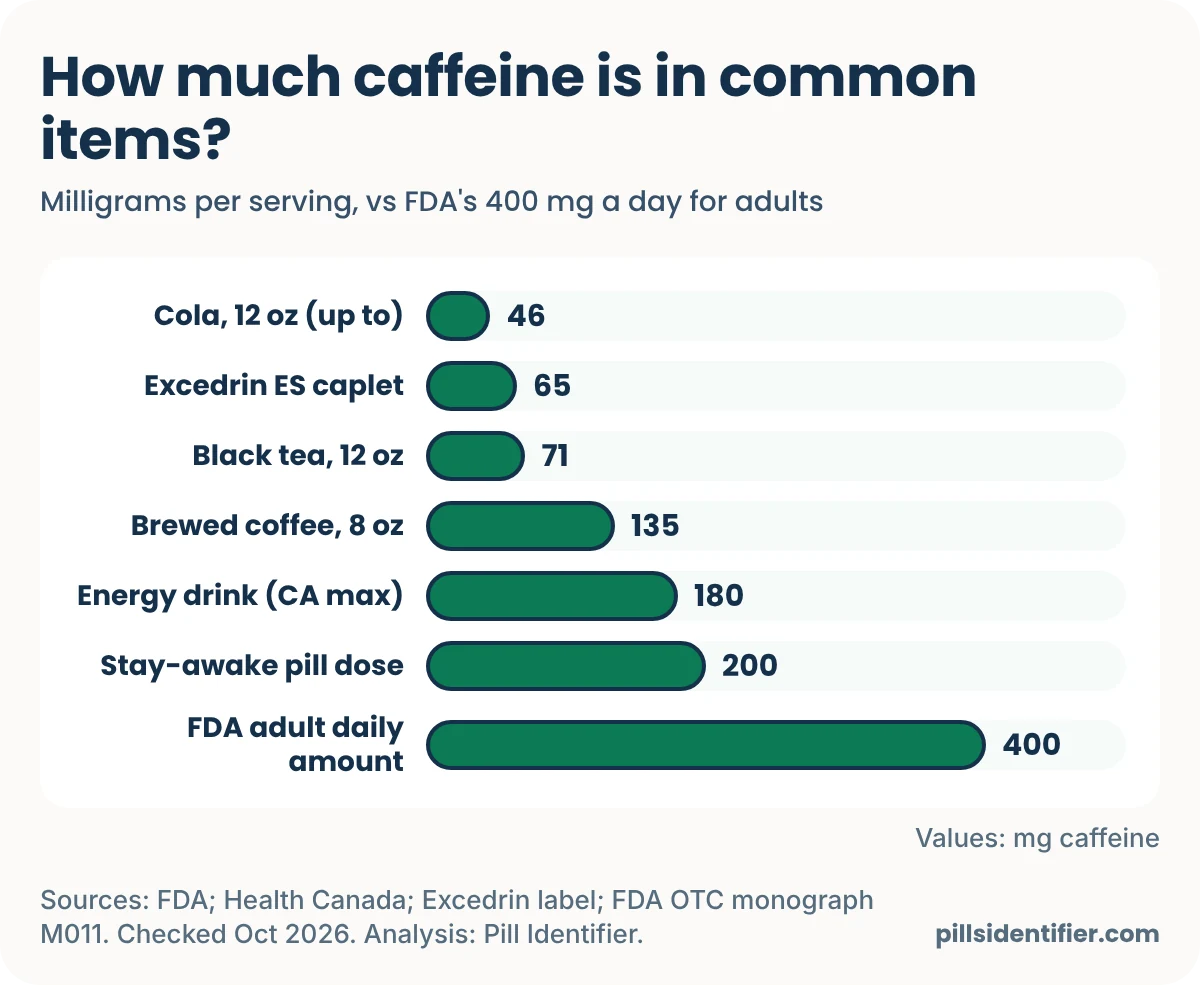
One 16-ounce energy drink can hold as much caffeine as two or more cups of coffee, and one dose of a stay-awake pill can hold half of the FDA’s 400 mg daily amount.
How can you avoid a caffeine overdose?
- Add up caffeine from every source, including medicines and workout supplements.
- Don’t buy pure or highly concentrated caffeine powders or liquids.
- Read energy drink labels for caffeine per serving and servings per day.
- Don’t mix caffeine with alcohol.
- Keep caffeine pills away from children, and see our guide on how to dispose of unused medicines.
- Not sure what a pill is? Try our identify a pill by photo tool or the NDC lookup.
Common questions
How much caffeine is an overdose?
No single amount applies to everyone, because people vary widely in how sensitive they are to caffeine, the FDA says. Health agencies give limits instead, such as 400 mg a day for most healthy adults. If you have a racing heart, shaking or vomiting after caffeine, call Poison Control.
Can you die from too much caffeine?
Yes, though it is rare. MedlinePlus says death may result from seizures or an irregular heartbeat in severe cases, and the FDA knows of at least two deaths linked to pure or highly concentrated caffeine. If you are thinking about suicide, the crisis lines in the help box above are free and open now.
How long does a caffeine overdose last?
It depends on the person and the amount, since how fast the body clears caffeine varies widely, according to the FDA. Alcohol and some medicines can make caffeine last longer, StatPearls notes. Don’t wait out serious symptoms like a seizure or an uneven heartbeat.
Is 400 mg of caffeine too much?
For most healthy adults, the FDA cites 400 mg a day as an amount not generally associated with negative effects. That is about three 8-ounce cups of brewed coffee. It is more than the limits for pregnancy and children, and Australia’s FSANZ advises adults to have no more than 200 mg in one serving.
Can you overdose on caffeine pills?
Yes. Stay-awake pills hold 100 to 200 mg of caffeine per dose and are labeled for occasional use only. Excedrin also contains acetaminophen and aspirin, which can cause harm that shows up later, so call Poison Control even if the person seems fine.
How many energy drinks is too many?
Follow the label. Canadian energy drink labels must state the most servings per day, and Indian caffeinated drink labels must say “consume not more than 500 ml per day.” Experts advise children and teens not to drink them at all.