Sertraline (Zoloft): Uses, Side effects, Pill identification and overdose
What sertraline treats, how long it takes to work, what the pills look like, serotonin syndrome and overdose signs, plus brand names and approved uses in four countries.
Sertraline is a prescription antidepressant from the SSRI family, best known by the brand name Zoloft. In the US it is approved to treat depression, obsessive-compulsive disorder (OCD), panic disorder, PTSD, social anxiety disorder and premenstrual dysphoric disorder (PMDD). It may take a few weeks or longer to feel the full benefit. Taking too much can be dangerous, especially with alcohol or other drugs.
At a glance
- The FDA first approved Zoloft (sertraline) on December 30, 1991, according to Drugs@FDA.
- Our count of the FDA’s National Drug Code Directory (data updated October 2, 2026) found 225 prescription sertraline listings from 47 labelers, and only 4 of them are brand-name Zoloft.
- Sertraline carries an FDA boxed warning because antidepressants raised the risk of suicidal thoughts and behaviors in people under 24 in short-term studies.
- The FDA label (revised August 2023) says sertraline must not be taken with an MAOI antidepressant or within 14 days of stopping one, because of the risk of serotonin syndrome.
- After an overdose, the FDA label warns that seizures and heart rhythm changes may be delayed.
- Zoloft looks different by country: light green, blue or yellow tablets in the US, white tablets in Australia and capsules in Canada.
What is sertraline used for?
Sertraline belongs to a group of antidepressants called selective serotonin reuptake inhibitors (SSRIs). According to MedlinePlus, it works by increasing serotonin, a natural substance in the brain that helps keep mood balanced. It is prescription-only in all five places we cover, and the FDA label states it is not a controlled substance.
In the US, the FDA has approved sertraline for:
- Major depressive disorder (depression)
- Obsessive-compulsive disorder (OCD), in adults and children 6 and older
- Panic disorder and posttraumatic stress disorder (PTSD)
- Social anxiety disorder
- Premenstrual dysphoric disorder (PMDD)
Doctors sometimes prescribe it “off-label” for other conditions, such as generalized anxiety disorder, according to StatPearls. Approved uses differ by country (see our table below).
How long does sertraline take to work?
It may take a few weeks or longer before you feel the full benefit, says MedlinePlus, so keep taking it as prescribed. The NHS notes that most side effects ease after a couple of weeks.
It is usually taken once a day, in the morning or evening. If you miss a dose, never take a double dose to make up for it. The oral solution contains 12% alcohol, so it must not be used with disulfiram (Antabuse).
What does sertraline look like?
In the US, sertraline comes as 25, 50 and 100 mg tablets, 150 and 200 mg capsules, and an oral solution (20 mg per mL).
- Zoloft tablets (US): engraved “ZOLOFT” on one side and the strength on the other. The 25 mg is light green, 50 mg is light blue and 100 mg is light yellow.
- Generic tablets (US): colors, shapes and imprints vary by maker, so a refill can look completely different.
- Zoloft in Australia: white, capsule-shaped tablets marked “ZLT” with “50” or “100”.
- Zoloft in Canada: capsules. The 25 mg is yellow, 50 mg is white and yellow, and 100 mg is orange.
To check a pill, see pictures of sertraline pills, use our pill imprint search, or search a Canadian DIN with our NDC and DIN lookup. If a refill changed color, read why your refill looks different. A matching imprint does not prove a pill is real, because fake pills can copy real ones.
What are the common side effects of sertraline?
In clinical trials, the most common side effects on the FDA label were:
- Nausea, diarrhea or loose stools, and indigestion
- Trouble sleeping, or feeling sleepy and tired
- Dry mouth, dizziness and shaking (tremor)
- Agitation, heavy sweating and less appetite
- Sexual side effects, such as lower sex drive or delayed ejaculation
Tell your prescriber if side effects don’t ease or bother you.
What is the boxed warning on sertraline?
The FDA’s boxed warning says antidepressants increased the risk of suicidal thoughts and behavior in children and young adults in short-term studies. MedlinePlus says this means people younger than 24, and that the risk may be higher in the first few months and when the dose goes up.
Call the prescriber right away about new or worse depression or anxiety, thoughts of self-harm, panic attacks, agitation, trouble sleeping or aggressive behavior, and make sure family or caregivers know these signs. If you are having thoughts of harming yourself now, you can reach the crisis lines in the help box above.
What is serotonin syndrome, and which medicines raise the risk?
Serotonin syndrome happens when too much serotonin builds up. The Zoloft label calls it “a potentially life-threatening condition.” Signs include agitation, hallucinations or confusion; a fast heartbeat, sweating, flushing and high temperature; shaking, stiff or twitching muscles and poor coordination; seizures; and nausea, vomiting or diarrhea.
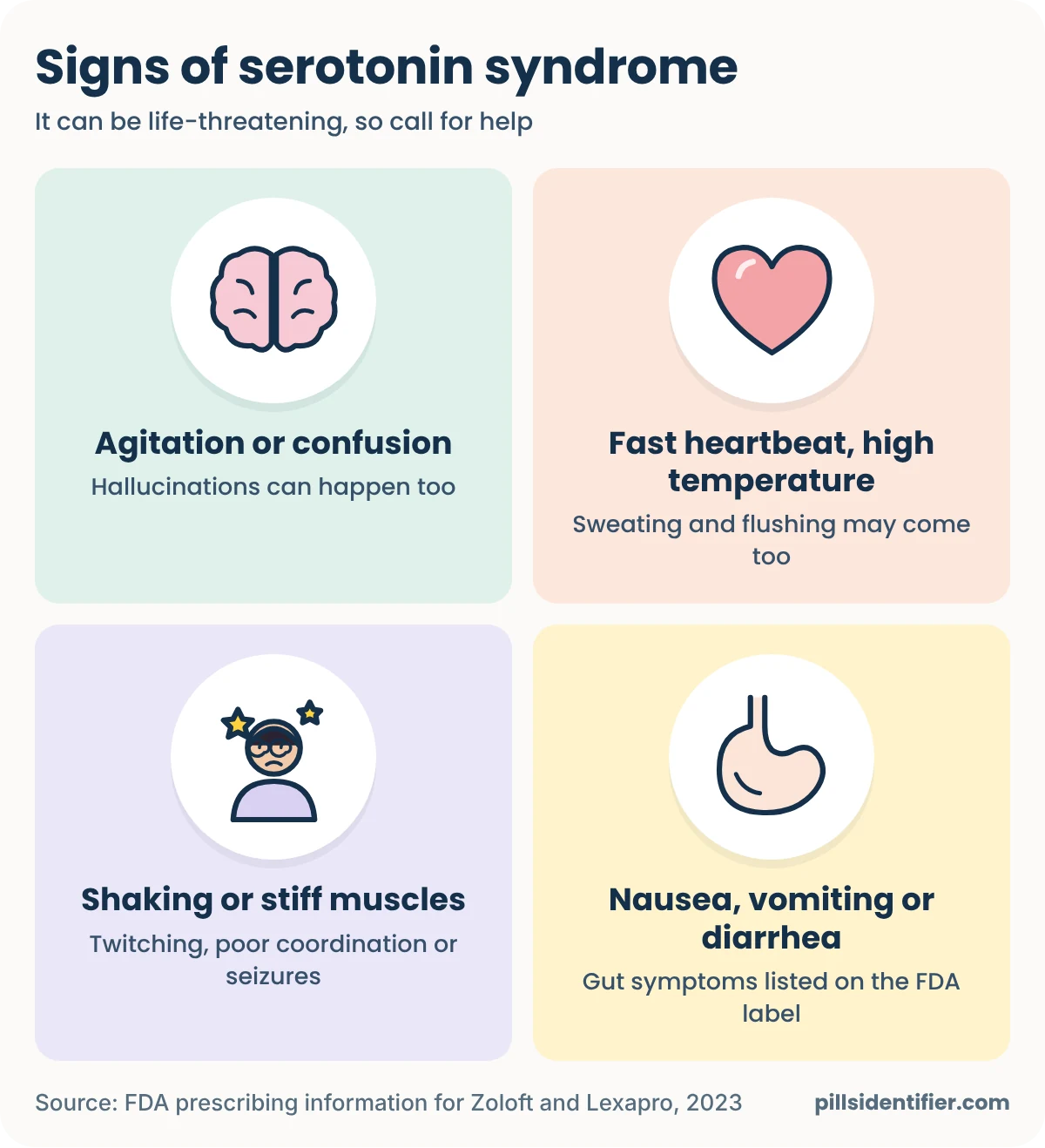
The risk goes up when sertraline is combined with other drugs that raise serotonin. The FDA label names triptans for migraine, tricyclic antidepressants, fentanyl, meperidine, methadone, tramadol (see our tramadol overdose guide), lithium, tryptophan, buspirone, amphetamines and St. John’s wort.
Sertraline must never be combined with an MAOI antidepressant, including the antibiotic linezolid and intravenous methylene blue, or taken within 14 days of one. It must also never be taken with pimozide. Ask a pharmacist to check any new medicine or supplement against sertraline.
What other serious risks does sertraline have?
- Bleeding: aspirin, NSAIDs such as ibuprofen, and blood thinners such as warfarin add to the bleeding risk of SSRIs. See our warfarin overdose guide for bleeding signs.
- Low sodium: older adults and people low on fluids are at higher risk. Signs include headache, confusion, weakness and unsteadiness that can lead to falls.
- Heart rhythm: QTc prolongation and a dangerous rhythm called torsade de pointes have been reported.
Can you stop taking sertraline suddenly?
No. “Do not stop taking sertraline without talking to your doctor,” says MedlinePlus. The FDA label lists discontinuation symptoms such as nausea, dizziness, irritability, “electric shock” sensations, headache, trouble sleeping and seizures. It recommends lowering the dose gradually, and the NHS says this may take several weeks or months.
Can you take sertraline while pregnant?
Talk to your doctor if you are pregnant or planning to be, and don’t stop sertraline on your own. The FDA label says first-trimester studies found no difference in major birth defect risk compared with the background rate. Use late in pregnancy may affect the newborn and raise the risk of heavy bleeding after birth.
Can you overdose on sertraline?
Yes. Compared with older antidepressants such as tricyclics and MAOIs, SSRIs like sertraline “are associated with fewer toxic effects,” according to StatPearls. But a sertraline overdose can still be serious, and some effects can start hours later. See also can you overdose on Lexapro.
What are the symptoms of a sertraline overdose?
The US label, Health Canada’s Zoloft monograph and MedlinePlus list symptoms such as:
- Sleepiness, dizziness and agitation
- Nausea, vomiting and diarrhea
- Shaking, dilated pupils and loss of coordination
- A fast, pounding or irregular heartbeat, and high blood pressure (rarely low)
- Fever, sweating, shivering, confusion, hallucinations and severe muscle stiffness or twitching
- Seizures and heart rhythm changes on an ECG, both of which may be delayed
- Coma (loss of consciousness)
Mixed overdoses are more dangerous. The FDA label says other serotonin-raising drugs add to the risk of serotonin syndrome, and lists alcohol among the substances seen with low blood pressure. StatPearls says the most severe cases involve combinations of serotonin-raising drugs. For warning signs that apply to any drug, see signs of an overdose.
A sertraline overdose is not a calm or gentle experience. It can mean vomiting, shaking, agitation, seizures and a heart rhythm that needs watching in hospital. Getting help early gives doctors the most options.
What should you do if someone took too much sertraline?
- Call emergency services if the person has a seizure, can’t be woken, has trouble breathing, or has a racing or irregular heartbeat.
- Otherwise, call poison control now, even if the person seems fine. Seizures and heart effects can be delayed.
- Keep the bottle or box and anything else they may have taken.
- Don’t make them vomit, and don’t give food, drinks or other medicines unless a professional tells you to.
- Stay with them. If they are drowsy but breathing, turn them on their side (the recovery position). Start CPR if they stop breathing and you are trained.
How do hospitals treat a sertraline overdose?
Care is mostly close watching and treating problems as they appear. The team may:
- Monitor the heart with an ECG and check blood pressure, breathing and temperature
- Give activated charcoal if the person arrives soon after the overdose
- Use medicines called benzodiazepines to calm severe agitation or stop seizures
- Treat serotonin syndrome with cooling and sometimes a serotonin-blocking medicine called cyproheptadine
- Support breathing in severe cases
To understand what happens inside the body during poisoning, read what is an overdose.
Who is most at risk, and how can you prevent an overdose?
The people at highest risk are those who mix sertraline with other serotonin-raising drugs or alcohol, young people under 24 (covered by the boxed warning), older adults (who are more likely to get low sodium) and children who find tablets. Keep medicines in their original packaging, locked away and out of sight. Check the imprint on any refill that looks different, and get rid of unused medicines safely.
Sertraline brand names and approved uses by country
Sertraline’s brand names, forms and approved uses differ by country, which matters if you travel or find a pill from abroad.
| Place | Brand names you may see | Forms sold | Approved uses | Status |
|---|---|---|---|---|
| US and Puerto Rico | Zoloft (Viatris); generics labeled “sertraline” | Tablets 25, 50, 100 mg; capsules 150, 200 mg; oral solution 20 mg/mL | Depression, OCD (age 6 and up), panic disorder, PTSD, social anxiety disorder, PMDD | Prescription only; not a controlled substance |
| Canada | Zoloft (BGP Pharma, a Viatris company); APO-Sertraline and other generics | Capsules 25, 50, 100 mg | Depression, panic disorder, OCD; no approved use under 18 | Prescription only (“Pr”) |
| Australia | Zoloft, Eleva, Setrona, Sertra, APO-Sertraline, Sertraline Sandoz and others | Tablets 50, 100 mg (on the PBS) | Depression, OCD (age 6 and up), panic disorder, social anxiety disorder, PMDD | Schedule 4, prescription only |
| India | Daxid (Pfizer), Serta (Torrent), Zosert (Sun Pharma), Serlift (Eris Lifesciences) | Tablets 25, 50, 100 mg | Depression, OCD (adults and children), panic disorder, PTSD, social anxiety disorder, PMDD (Daxid label) | Prescription only (Daxid label) |
A few things stand out. Zoloft and the Canadian generics we checked are capsules, not tablets, and Canada has no approved use for anyone under 18. Australia’s Zoloft information does not list PTSD. And the 150 mg and 200 mg capsules sold in the US are not among the products we found in the other countries.
Our analysis: sertraline in the FDA’s drug directory
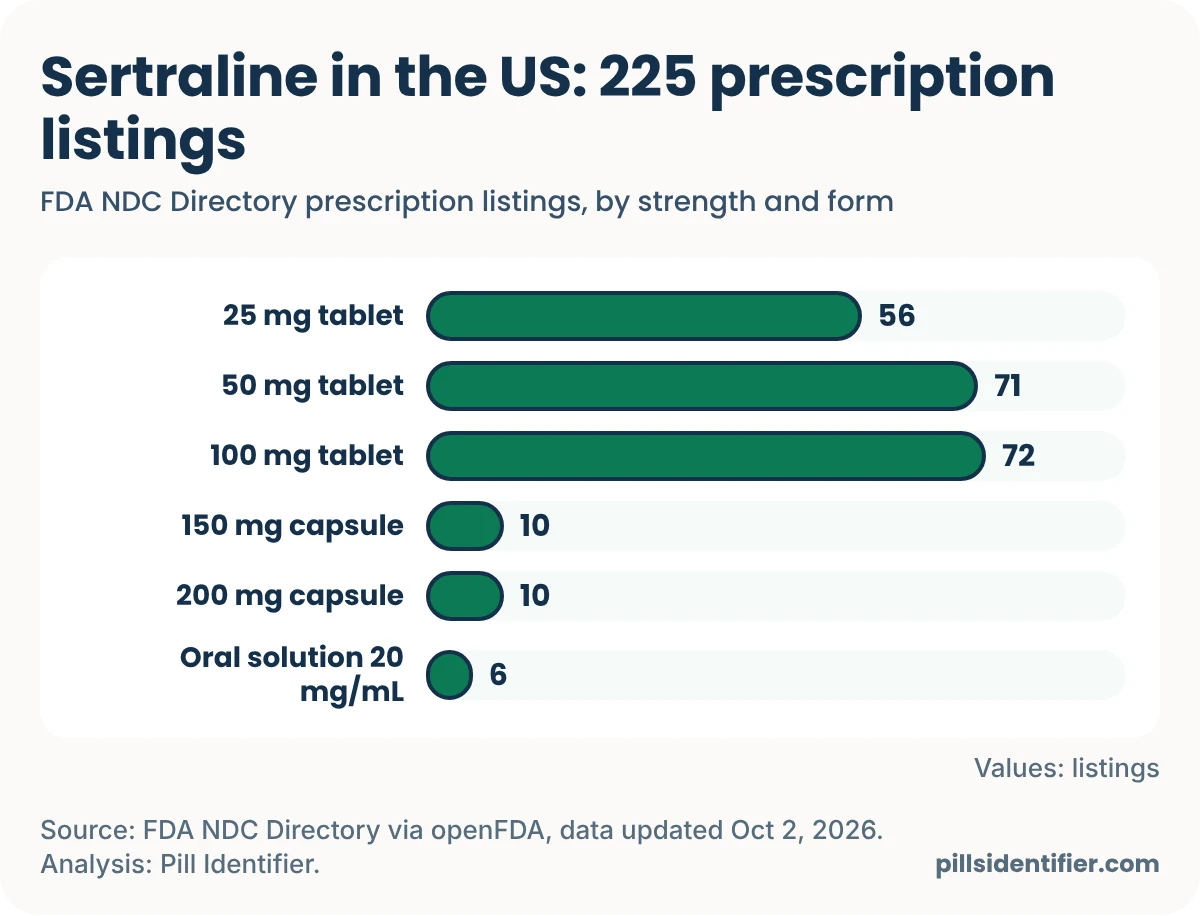
The FDA’s National Drug Code (NDC) Directory holds 225 prescription sertraline listings from 47 labelers. Only 4 are brand-name Zoloft (three tablet strengths and the oral solution, all from Viatris). The rest are generics or repackaged generics.
| Strength and form | Listings |
|---|---|
| 25 mg tablet | 56 |
| 50 mg tablet | 71 |
| 100 mg tablet | 72 |
| 150 mg capsule | 10 |
| 200 mg capsule | 10 |
| Oral solution 20 mg/mL | 6 |
| Total | 225 |
- Tablets dominate: 199 of the 225 listings (88%) are 25, 50 or 100 mg tablets.
- Capsules are rare: all 20 capsule listings are 150 or 200 mg, from just 10 labelers.
- Repackagers are common: labelers with many listings, such as A-S Medication Solutions (28) and Bryant Ranch Prepack (19), repackage medicines made by other companies.
Method note: We searched the FDA’s National Drug Code Directory through the openFDA API (data updated October 2, 2026; checked October 4, 2026) for every listing that contains sertraline, kept the 225 human prescription listings, and merged five labeler names that were the same company spelled two ways. Listings include repackagers, so they are not the same as products on shelves. Country details come from each country’s official product information, plus major Indian pharmacy listings for Indian brands other than Daxid. Brand lists are not complete.
Common questions
Is sertraline the same as Zoloft?
Yes. Sertraline is the generic name and Zoloft is the original brand. FDA-approved generics contain the same active ingredient, but the tablets can look different from Zoloft and from each other.
Can you die from a sertraline overdose?
A sertraline overdose can be serious. The FDA label reports seizures, coma and heart rhythm changes, some of them delayed, as well as serotonin syndrome, which it calls potentially life-threatening. The risk is higher when other drugs or alcohol are involved, so always call for help right away.
What happens if I accidentally take two sertraline tablets?
Call your pharmacist or poison control and tell them what you took and when. The NHS warns that taking an extra dose of sertraline can be dangerous. Don’t wait for symptoms, because some effects can be delayed.
Can you drink alcohol while taking sertraline?
MedlinePlus says alcohol can make the side effects of sertraline worse, and the NHS says it is best not to drink while taking it. Alcohol also makes an overdose more dangerous. Ask your prescriber what is safe for you.
Is sertraline addictive?
Sertraline is not a controlled substance, according to the FDA label. But stopping it suddenly can cause discontinuation symptoms such as dizziness, nausea and “electric shock” sensations. Your doctor can help you lower the dose slowly.