Drawing based on the label description. No photo yet.
“Tetracycline Hydrochloride Capsules USP, 250 mg are available as orange opaque and yellow opaque capsules, imprinted with "Z" and "2416" in black ink, containing 250 mg of tetracycline hydrochloride”
Z 2416 pill
Pill with imprint Z 2416 is orange & yellow, capsule, 19 mm and has been identified as Tetracycline Hydrochloride 250 mg. It is used for H. pylori infection, bronchitis and bacterial infections. It is supplied by Stat Rx USA LLC.
Tetracycline Hydrochloride 250 mg
- Imprint
- Z 2416
- Strength
- 250 mg
- Used for
- H. pylori infection, bronchitis and bacterial infections
- Color
- Orange, Yellow
- Shape
- Capsule / oblong
- Size
- 19 mm
- Score
- No score line
- Form
- Capsule
- Manufacturer
- Stat Rx USA LLC
- Drug class
- Antibiotic (tetracycline)
- NDC
- 16590-216, 0172-2416, 16590-216-28, 0440-8505, 0440-8505-91
Source: the official drug label on DailyMed (US National Library of Medicine). Last checked .
Report a mistake
What is Tetracycline Hydrochloride used for?
Tetracycline Hydrochloride is used for H. pylori infection, bronchitis, bacterial infections and gonorrhea.
- Medicine type
- Antibiotic (tetracycline)
Official uses from the US prescribing label
To reduce the development of drug-resistant bacteria and maintain the effectiveness of tetracycline hydrochloride and other antibacterial drugs, tetracycline hydrochloride should be used only to treat infections that are proven or strongly suspected to be caused by susceptible bacteria. When culture and susceptibility information are available, they should be considered in selecting or modifying antibacterial therapy. In the absence of such data, local epidemiology and susceptibility patterns may contribute to the empiric selection of therapy.
Tetracycline is indicated in the treatment of infections caused by susceptible strains of the designated organisms in the conditions listed below:
- Upper respiratory tract infections caused by Streptococcus pyogenes, Streptococcus pneumoniae and Hemophilus influenzae. Note: Tetracycline should not be used for streptococcal disease unless the organism has been demonstrated to be susceptible.
- Lower respiratory tract infections caused by Streptococcus pyogenes, Streptococcus pneumoniae, Mycoplasma pneumoniae (Eaton agent, and Klebsiella sp.)
- Skin and soft tissue infections caused by Streptococcus pyogenes, Staphylococcus aureaus. (Tetracyclines are not the drugs of choice in the treatment of any type of staphylococcal infections.)
- Infections caused by rickettsia including Rocky Mountain spotted fever, typhus group infections, Q fever, rickettsialpox.
- Psittacosis caused by Chlamydophila psittaci.
- Infections caused by Chlamydia trachomatis such as uncomplicated urethral, endocervical or rectal infections, inclusion conjunctivitis, trachoma, and lymphogranuloma venereum.
- Granuloma inquinale caused by Klebsiella granulomatis.
- Relapsing fever caused by Borrelia sp.
- Bartonellosis caused by Bartonella bacilliformis.
- Chancroid caused by Hemophilus ducreyi.
- Tularemia caused by Francisella tularensis.
- Plaque caused by Yersinia pestis.
- Cholera caused by Vibrio cholerae.
- Brucellosis caused by Brucella species (tetracycline may be used in conjunction with an aminoglycoside).
- Infections due to Campylobacter fetus.
- As adjunctive therapy in intestinal amebiasis caused by Entamoeba histolytica.
- Urinary tract infections caused by susceptible strains of Escherichia coli, Klebsiella, etc.
- Other infections caused by susceptible gram-negative organisms such as E. coli, Enterobacter aerogenes, Shigella sp., Acinetobacter sp., Klebsiella sp., and Bacteroides sp.
- In severe acne, adjunctive therapy with tetracycline may be useful.
When penicillin is contraindicated, tetracyclines are alternative drugs in the treatment of the following infections:
- Syphilis and yaws caused by Treponema pallidum and pertenue, respectively,
- Vincent’s infection caused by Fusobacterium fusiforme,
- Infections caused by Neisseria gonorrhoeae,
- Anthrax caused by Bacillus anthracis,
- Infections due to Listeria monocytogenes,
- Actinomycosis caused by Actinomyces species,
- Infections due to Clostridium species.
From the FDA-approved label on DailyMed (published Aug 13, 2026).
Doctors sometimes prescribe a medicine for other reasons too. If you are not sure what yours is for, ask your pharmacist.
Is this your pill? Check every detail
- Your pill shows Z 2416. The parts can be split between the two sides, so turn the pill over and check both.
- It is orange & yellow, capsule, 19 mm.
- Its score line and coating match the details on this page.
- It came from a pharmacy package that names the same drug.
Ingredients
Active: Tetracycline Hydrochloride
Inactive: D&c Yellow No. 10, Fd&c Blue No. 1, Fd&c Blue No. 2, Fd&c Red No. 40, Fd&c Yellow No. 6, Ferrosoferric Oxide, Gelatin, Propylene Glycol, Shellac, Silicon Dioxide, Starch, Corn, Stearic Acid, Titanium Dioxide
Also distributed by
Liberty Pharmaceuticals, Inc.
Pills that look similar but are different drugs
Same color and shape, different medicine. This is why the imprint matters.
-
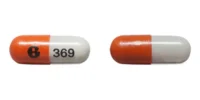 G 369
Topiramate 100 mg
Gray & orange, capsule, 19 mm
Used for bipolar disorder and focal seizures
-
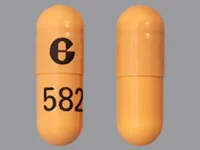 G 582
Fenofibrate 200 mg
Orange, capsule, 19 mm
Used for high cholesterol and high triglycerides
-
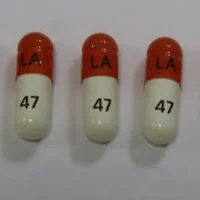 LA 47
Pregabalin 225 mg
Orange & white, capsule, 19 mm
Used for seizures and nerve pain after shingles
Schedule V
-
 E 92
Fluoxetine 40 mg
Green & orange, capsule, 18 mm
Used for panic disorder and OCD
-
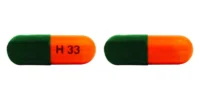 H33
Carvedilol Phosphate 40 mg
Green & orange, capsule, 18 mm
Used for high blood pressure and heart failure
-
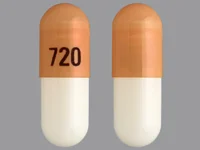 720
Budesonide 3 mg
Orange & white, capsule, 19 mm
Used for inflammatory bowel disease and year-round allergies
Other Tetracycline Hydrochloride pills
-
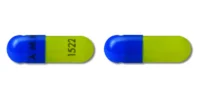 AMNEAL 1522
Tetracycline Hydrochloride 250 mg
Blue & yellow, capsule, 18 mm
Used for H. pylori infection and bronchitis
-
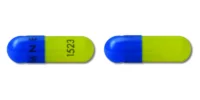 AMNEAL 1523
Tetracycline Hydrochloride 500 mg
Blue & yellow, capsule, 22 mm
Used for H. pylori infection and bronchitis
- 2416 Tetracycline Hydrochloride 250 mg Orange & yellow, capsule, 19 mm Used for H. pylori infection and bronchitis
- 5225 Tetracycline Hydrochloride 250 mg Yellow, capsule, 19 mm Used for H. pylori infection and bronchitis
- 250 Tetracycline Hydrochloride 250 mg Pink, oval, 13 mm Used for H. pylori infection and bronchitis
- B906 Tetracycline Hydrochloride 250 mg Blue & yellow, capsule, 18 mm Used for H. pylori infection and bronchitis
- HP 17 Tetracycline Hydrochloride 250 mg Blue & yellow, capsule, 18 mm Used for H. pylori infection and bronchitis
- WPI 2234 Tetracycline Hydrochloride 250 mg Orange & yellow, capsule, 19 mm Used for H. pylori infection and bronchitis