Drawing based on the label description. No photo yet.
“Capsules: 250 mg, pink, oblong capsules imprinted with "TPV 250"”
TPV 250 pill
Pill with imprint TPV 250 is pink, capsule, 22 mm and has been identified as Tipranavir 250 mg. It is used for HIV. It is supplied by Boehringer Ingelheim Pharmaceuticals, Inc.
Tipranavir 250 mg
- Imprint
- TPV 250
- Strength
- 250 mg
- Used for
- HIV
- Color
- Pink
- Shape
- Capsule / oblong
- Size
- 22 mm
- Score
- No score line
- Form
- Capsule, liquid filled
- Manufacturer
- Boehringer Ingelheim Pharmaceuticals, Inc
- Drug class
- Antiviral (protease inhibitor)
- NDC
- 0597-0003, 0597-0003-02
Source: the official drug label on DailyMed (US National Library of Medicine). Last checked .
Report a mistake
What is Tipranavir used for?
Tipranavir is used for HIV.
- Medicine type
- Antiviral (protease inhibitor)
Official uses from the US prescribing label
APTIVUS, co-administered with ritonavir, is indicated for combination antiretroviral treatment of HIV-1 infected adults and pediatric patients weighing 36 kg or higher who are treatment-experienced and infected with HIV-1 strains resistant to more than one protease inhibitor (PI).
This indication is based on analyses of plasma HIV-1 RNA levels in two controlled studies of APTIVUS/ritonavir of 48 weeks duration in treatment-experienced adults and one open-label 48-week study in pediatric patients. The adult studies were conducted in clinically advanced, 3-class antiretroviral (NRTI, NNRTI, PI) treatment-experienced adults with evidence of HIV-1 replication despite ongoing antiretroviral therapy.
The following points should be considered when initiating therapy with APTIVUS/ritonavir:
- The use of APTIVUS/ritonavir in treatment-naïve patients is not recommended.
- The use of other active agents with APTIVUS/ritonavir is associated with a greater likelihood of treatment response.
- Genotypic or phenotypic testing and/or treatment history should guide the use of APTIVUS/ritonavir. The number of baseline primary protease inhibitor mutations affects the virologic response to APTIVUS/ritonavir.
- Use caution when prescribing APTIVUS/ritonavir to patients with elevated transaminases, hepatitis B or C co-infection or patients with mild hepatic impairment.
- Liver function tests should be performed at initiation of therapy with APTIVUS/ritonavir and monitored frequently throughout the duration of treatment.
- The drug-drug interaction potential of APTIVUS/ritonavir when co-administered with other drugs must be considered prior to and during APTIVUS/ritonavir use.
- Use caution when prescribing APTIVUS/ritonavir in patients who may be at risk for increased bleeding or who are receiving medications known to increase the risk of bleeding.
There are no study results demonstrating the effect of APTIVUS/ritonavir on clinical progression of HIV-1.
From the FDA-approved label on DailyMed (published Jun 20, 2025).
Doctors sometimes prescribe a medicine for other reasons too. If you are not sure what yours is for, ask your pharmacist.
Is this your pill? Check every detail
- Your pill shows TPV 250. The parts can be split between the two sides, so turn the pill over and check both.
- It is pink, capsule, 22 mm.
- Its score line and coating match the details on this page.
- It came from a pharmacy package that names the same drug.
Sold under the brand name Aptivus.
Ingredients
Active: Tipranavir
Pills that look similar but are different drugs
Same color and shape, different medicine. This is why the imprint matters.
-
 600 G222
Lithium Carbonate 600 mg
Gray & pink, capsule, 23 mm
Used for depression and PTSD
-
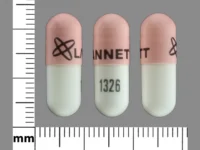 LANNETT 1326
Ursodiol 300 mg
Pink & white, capsule, 22 mm
Used for cholelithiasis and biliary liver cirrhosis
-
 CFX 400
Cefixime 400 mg
Pink, capsule, 21 mm
Used for bronchitis and urinary tract infections (UTIs)
-
 APO 040
Omeprazole 40 mg
Brown & pink, capsule, 21 mm
Used for acid reflux (GERD) and heartburn
-
 A 6 7
Amoxicillin 875 mg
Pink, capsule, 21 mm
Used for ulcers and H. pylori infection
-
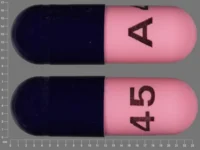 A45
Amoxicillin 500 mg
Blue & pink, capsule, 23 mm
Used for ulcers and H. pylori infection