Drawing based on the description in the official product monograph. No photo yet.
“Route of Administration Oral Dosage Form/ Strength/Composition Tablet 300 mg Non-Medicinal Ingredients colloidal silicon dioxide, croscarmellose sodium, D&C Yellow #10 aluminum lake 14-18%, hydroxypropyl cellulose, magnesium stearate, methylcellulose, polyethylene glycol, purified water, sunset yellow aluminum lake 40% and titanium dioxide.. Description Each orange, round, biconvex, fi”
300 pill
Pill with imprint 300 is orange & yellow, round and has been identified as Penicillin V Potassium 300 mg. It is used for sinus infections, bacterial infections and urinary tract infections (UTIs). It is supplied by Aa Pharma Inc.
Sold in Canada
Penicillin V Potassium 300 mg
- Brand
- Pen-VK
- Imprint
- 300
- Strength
- 300 mg
- Used for
- Sinus infections, bacterial infections and urinary tract infections (UTIs)
- Color
- Orange, Yellow
- Shape
- Round
- Score
- Breaks into 2 pieces
- Form
- Tablet
- Manufacturer
- Aa Pharma Inc
- Drug class
- Antibiotic (penicillin)
- Sold in
- Canada
- DIN
- 00642215
Source: Health Canada's Drug Product Database and the official product monograph. Last checked .
Report a mistake
What is Penicillin V Potassium used for?
Penicillin V Potassium is used for sinus infections, bacterial infections, urinary tract infections (UTIs) and ear infections.
- Medicine type
- Antibiotic (penicillin)
Official uses from the US prescribing label
To reduce the development of drug-resistant bacteria and maintain the effectiveness of penicillin V potassium and other antibacterial drugs, penicillin V potassium should be used only to treat or prevent infections that are proven or strongly suspected to be caused by susceptible bacteria. When culture and susceptibility information are available, they should be considered in selecting or modifying antibacterial therapy. In the absence of such data, local epidemiology and susceptibility patterns may contribute to the empiric selection of therapy.
Penicillin V potassium tablets are indicated in the treatment of mild to moderately severe infections due to penicillin G-sensitive microorganisms. Therapy should be guided by bacteriologic studies (including sensitivity tests) and by clinical response.
NOTE: Severe pneumonia, empyema, bacteremia, pericarditis, meningitis, and arthritis should not be treated with penicillin V during the acute stage. Indicated surgical procedures should be performed.
The following infections will usually respond to adequate dosage of penicillin V.
Streptococcal Infections (without bacteremia)
Mild-to-moderate infections of the upper respiratory tract, scarlet fever, and mild erysipelas.
NOTE: Streptococci in groups A, C, G, H, L, and M are very sensitive to penicillin. Other groups, including group D (enterococcus), are resistant.
Pneumococcal Infections
Mild to moderately severe infections of the respiratory tract.
Staphylococcal infections– penicillin G-sensitive
Mild infections of the skin and soft tissues.
NOTE: Reports indicate an increasing number of strains of staphylococci resistant to penicillin G, emphasizing the need for culture and sensitivity studies in treating suspected staphylococcal infections.
Fusospirochetosis (Vincent’s gingivitis and pharyngitis)
Mild to moderately severe infections of the oropharynx usually respond to therapy with oral penicillin.
NOTE: Necessary dental care should be accomplished in infections involving the gum tissue.
Medical conditions in which oral penicillin therapy is indicated as prophylaxis: For the prevention of recurrence following rheumatic fever and/or chorea: Prophylaxis with oral penicillin on a continuing basis has proven effective in preventing recurrence of these conditions.
Although no controlled clinical efficacy studies have been conducted, penicillin V has been suggested by the American Heart Association and the American Dental Association for use as an oral regimen for prophylaxis against bacterial endocarditis in patients who have congenital heart disease or rheumatic or other acquired valvular heart disease when they undergo dental procedures and surgical procedures of the upper respiratory tract1. Oral penicillin should not be used in those patients at particularly high risk for endocarditis (e.g., those with prosthetic heart valves or surgically constructed systemic pulmonary shunts). Penicillin V should not be used as adjunctive prophylaxis for genitourinary instrumentation or surgery, lower-intestinal tract surgery, sigmoidoscopy, and childbirth. Since it may happen that alpha hemolytic streptococci relatively resistant to penicillin may be found when patients are receiving continuous oral penicillin for secondary prevention of rheumatic fever, prophylactic agents other than penicillin may be chosen for these patients and prescribed in addition to their continuous rheumatic fever prophylactic regimen.
NOTE: When selecting antibiotics for the prevention of bacterial endocarditis, the physician or dentist should read the full joint statement of the American Heart Association and the American Dental Association1.
From the FDA-approved label on DailyMed (published Oct 05, 2026).
Doctors sometimes prescribe a medicine for other reasons too. If you are not sure what yours is for, ask your pharmacist.
Is this your pill? Check every detail
- Your pill shows 300.
- It is orange & yellow, round.
- Its score line and coating match the details on this page.
- It came from a pharmacy package that names the same drug.
Sold in Canada as Pen-VK by Aa Pharma Inc.
In Canada: prescription only.
Ingredients
Active: Penicillin V Potassium
Other pills with imprint 300
Same imprint, different listing. Check the color, size and maker against your pill.
- 300 Cifrazol 3775 IU / 1 mg Orange, capsule, 22 mm
- 300 Diltiazem Hydrochloride 300 mg Purple & white, capsule, 22 mm Used for high blood pressure and atrial fibrillation (irregular heartbeat)
- 300 Gabapentin 300 mg White, oval, 16 mm Used for bipolar disorder and focal seizures
- 300 Haloperidol 5 mg Pink, round, 8 mm Used for schizophrenia and psychosis
- 300 Hydrochlorothiazide and Irbesartan 25 mg / 300 mg Pink, oval Used for high blood pressure
- 300 Hydrochlorothiazide and Irbesartan 25 mg / 300 mg Pink, oval Used for high blood pressure
Pills that look similar but are different drugs
Same color and shape, different medicine. This is why the imprint matters.
-
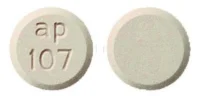 ap 107
Mebendazole 100 mg
Orange, round, 10 mm
Used for ancylostomiasis and ascariasis
-
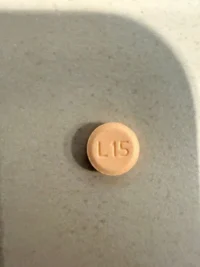 L15
Levothyroxine 0.025 mg
Orange, round, 6 mm
Used for goiter and myxedema
-
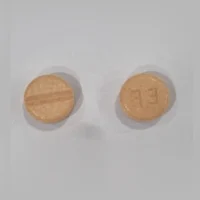 EF
Enalapril Maleate 20 mg
Orange, round, 9 mm
Used for severe high blood pressure and heart failure
-
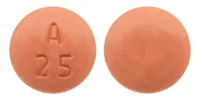 A25
Eltrombopag 25 mg
Orange, round, 7 mm
Used for aplastic anemia and idiopathic thrombocytopenic purpura
-
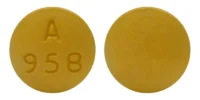 A 958
Lamotrigine 100 mg
Orange, round, 11 mm
Used for bipolar disorder and seizures
-
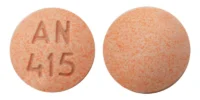 AN 415
Buprenorphine and Naloxone 8 mg / 2 mg
Orange, round, 11 mm
Used for opioid use disorder
Schedule III
Other Penicillin V Potassium pills
- S20 Penicillin V Potassium 250 mg White, oval, 14 mm Used for sinus infections and bacterial infections
- E 84 Penicillin V Potassium 250 mg White, round, 10 mm Used for sinus infections and bacterial infections
- WW 111 Penicillin V Potassium 250 mg White, round, 10 mm Used for sinus infections and bacterial infections
- 93 1172 Penicillin V Potassium 250 mg White, oval, 13 mm Used for sinus infections and bacterial infections
- S21 Penicillin V Potassium 500 mg White, oval, 17 mm Used for sinus infections and bacterial infections
- E 8 5 Penicillin V Potassium 500 mg White, capsule, 17 mm Used for sinus infections and bacterial infections
- 9 3 1174 Penicillin V Potassium 500 mg White, oval, 17 mm Used for sinus infections and bacterial infections
- W 112 Penicillin V Potassium 500 mg White, capsule, 7 mm Used for sinus infections and bacterial infections