Drawing based on the label description. No photo yet.
“Prednisolone Tablets, USP 5 mg are peach coloured, round shaped, approximately 6.35 mm, flat beveled edged scored tablets debossed with 'P & L' separated with score line on one side and '5' on the other side”
P L 5 pill
Pill with imprint P L 5 is orange, round, 6 mm and has been identified as Prednisolone 5 mg. It is used for swelling from fluid buildup, adrenal insufficiency and multiple sclerosis. It is supplied by Aurobindo Pharma Limited.
Prednisolone 5 mg
- Imprint
- P L 5
- Strength
- 5 mg
- Used for
- Swelling from fluid buildup, adrenal insufficiency and multiple sclerosis
- Color
- Orange
- Shape
- Round
- Size
- 6 mm
- Score
- Breaks into 2 pieces
- Form
- Tablet
- Manufacturer
- Aurobindo Pharma Limited
- Drug class
- Steroid (corticosteroid)
- NDC
- 59651-491, 59651-491-50, 59651-491-01
Source: the official drug label on DailyMed (US National Library of Medicine). Last checked .
Report a mistake
What is Prednisolone used for?
Prednisolone is used for swelling from fluid buildup, adrenal insufficiency, multiple sclerosis and ankylosing spondylitis.
- Medicine type
- Steroid (corticosteroid)
Official uses from the US prescribing label
1. Endocrine disorders. Primary or secondary adrenocortical insufficiency (hydrocortisone or cortisone is the first choice; synthetic analogs may be used in conjunction with mineralocorticoids where applicable; in infancy mineralocorticoid supplementation is of particular importance).
Congenital adrenal hyperplasia
Nonsuppurative thyroiditis
Hypercalcemia associated with cancer
2. Rheumatic disorders. As adjunctive therapy for short-term administration (to tide the patient over an acute episode or exacerbation) in:
Psoriatic arthritis
Rheumatoid arthritis; including juvenile rheumatoid arthritis (selected cases may require low-dose maintenance therapy)
Ankylosing spondylitis
Acute and subacute bursitis
Acute nonspecific tenosynovitis
Acute gouty arthritis
Post-traumatic osteoarthritis
Synovitis of osteoarthritis
Epicondylitis
3. Collagen diseases. During an exacerbation or as maintenance therapy in selected cases of:
Systemic lupus erythematosus
Acute rheumatic carditis
Systemic dermatomyositis (polymyositis)
4. Dermatologic diseases
Pemphigus
Bullous dermatitis herpetiformis
Severe erythema multiforme (Stevens-Johnson syndrome)
Exfoliative dermatitis
Mycosis fungoides
Severe psoriasis
Severe seborrheic dermatitis
5. Allergic states. Control of severe or incapacitating allergic conditions intractable to adequate trials of conventional treatment:
Seasonal or perennial allergic rhinitis
Serum sickness
Bronchial asthma
Contact dermatitis
Atopic dermatitis
Drug hypersensitivity reactions
6. Ophthalmic diseases. Severe acute and chronic allergic and inflammatory processes involving the eye and its adnexa such as:
Allergic conjunctivitis
Keratitis
Allergic corneal marginal ulcers
Herpes zoster ophthalmicus
Iritis and iridocyclitis
Chorioretinitis
Anterior segment inflammation
Diffuse posterior uveitis and choroiditis
Optic neuritis
Sympathetic ophthalmia
7. Respiratory diseases
Symptomatic sarcoidosis
Loeffler's syndrome not manageable by other means
Berylliosis
Fulminating or disseminated pulmonary tuberculosis when used concurrently with appropriate antituberculous chemotherapy
Aspiration pneumonitis
8. Hematologic disorders
Idiopathic thrombocytopenic purpura in adults
Secondary thrombocytopenia in adults
Acquired (autoimmune) hemolytic anemia
Erythroblastopenia (RBC anemia)
Congenital (erythroid) hypoplastic anemia
9. Neoplastic diseases. For palliative management of:
Leukemias and lymphomas in adults
Acute leukemia of childhood
10. Edematous states. To induce a diuresis or remission of proteinuria in the nephrotic syndrome, without uremia, of the idiopathic type or that due to lupus erythematosus.
11. Gastrointestinal diseases. To tide the patient over a critical period of the disease in:
Ulcerative colitis
Regional enteritis
12. Nervous system. Acute exacerbations of multiple sclerosis
13. Miscellaneous
Tuberculous meningitis with subarachnoid block or impending block when used concurrently with appropriate antituberculous chemotherapy
Trichinosis with neurologic or myocardial involvement
From the FDA-approved label on DailyMed (published Jan 06, 2026).
Doctors sometimes prescribe a medicine for other reasons too. If you are not sure what yours is for, ask your pharmacist.
Is this your pill? Check every detail
- One side shows P & L and the other side shows 5.
- It is orange, round, 6 mm.
- Its score line and coating match the details on this page.
- It came from a pharmacy package that names the same drug.
Ingredients
Active: Prednisolone
Inactive: Anhydrous Lactose, Silicon Dioxide, Crospovidone, D&c Yellow No. 10 Aluminum Lake, Docusate Sodium, Fd&c Yellow No. 6, Magnesium Stearate, Sodium Benzoate
Pills that look similar but are different drugs
Same color and shape, different medicine. This is why the imprint matters.
-
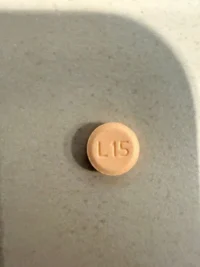 L15
Levothyroxine 0.025 mg
Orange, round, 6 mm
Used for goiter and myxedema
-
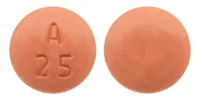 A25
Eltrombopag 25 mg
Orange, round, 7 mm
Used for aplastic anemia and idiopathic thrombocytopenic purpura
-
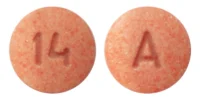 A 14
Buprenorphine and Naloxone 2 mg / 0.5 mg
Orange, round, 6 mm
Used for opioid use disorder
Schedule III
-
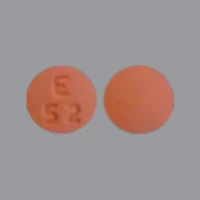 E 52
Quetiapine Fumarate 25 mg
Orange, round, 6 mm
Used for bipolar disorder and schizophrenia
-
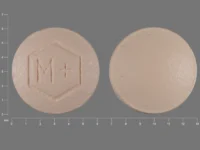 M
Levomefolate Calcium 0.451 mg
Orange, round, 6 mm
Used for anemia from low B12 or folate and low folate
-
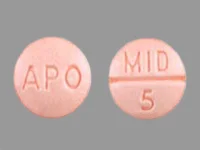 APO MID 5
Midodrine Hydrochloride 5 mg
Orange, round, 7 mm
Used for low blood pressure on standing and bladder leaks
Other Prednisolone pills
- DAN DAN 5059 Prednisolone Orange, round, 6 mm Used for swelling from fluid buildup and adrenal insufficiency
- ORA 10 Prednisolone Sodium Phosphate 10 mg White, round, 6 mm Used for swelling from fluid buildup and adrenal insufficiency
- ORA 15 Prednisolone Sodium Phosphate 15 mg White, round, 6 mm Used for swelling from fluid buildup and adrenal insufficiency
- ORA 30 Prednisolone Sodium Phosphate 30 mg White, round, 6 mm Used for swelling from fluid buildup and adrenal insufficiency
- CE 117 Prednisolone 5 mg White, round, 6 mm Used for swelling from fluid buildup and adrenal insufficiency
- XJ 011 Prednisolone 5 mg Yellow, round, 6 mm Used for swelling from fluid buildup and adrenal insufficiency