Drawing based on the label description. No photo yet.
“Tamoxifen citrate tablets USP, 20 mg (base) are white to off-white, round biconvex beveled edges film coated tablets debossed with "MYX" and "643" on one face of the tablet and plain on the other”
MYX 643 pill
Pill with imprint MYX 643 is white, round, 9 mm and has been identified as Tamoxifen Citrate 20 mg. It is used for breast cancer, gynecomastia and pancreatic neoplasms. It is supplied by Dr. Reddy's Labratories Inc.
Tamoxifen Citrate 20 mg
- Imprint
- MYX 643
- Strength
- 20 mg
- Used for
- Breast cancer, gynecomastia and pancreatic neoplasms
- Color
- White
- Shape
- Round
- Size
- 9 mm
- Score
- No score line
- Form
- Tablet, film coated
- Manufacturer
- Dr. Reddy's Labratories Inc
- Drug class
- Estrogen modulator
- NDC
- 75907-059, 75907-059-30, 75907-059-10, 51862-643, 51862-643-30, 51862-643-10
Source: the official drug label on DailyMed (US National Library of Medicine). Last checked .
Report a mistake
What is Tamoxifen Citrate used for?
Tamoxifen Citrate is used for breast cancer, gynecomastia and pancreatic neoplasms.
- Medicine type
- Estrogen modulator
Official uses from the US prescribing label
Metastatic Breast Cancer
Tamoxifen citrate tablets are effective in the treatment of metastatic breast cancer in women and men. In premenopausal women with metastatic breast cancer, tamoxifen citrate tablets are an alternative to oophorectomy or ovarian irradiation. Available evidence indicates that patients whose tumors are estrogen receptor positive are more likely to benefit from tamoxifen citrate tablet therapy.
Adjuvant Treatment of Breast Cancer
Tamoxifen citrate tablets are indicated for the treatment of node-positive breast cancer in postmenopausal women following total mastectomy or segmental mastectomy, axillary dissection, and breast irradiation. In some tamoxifen adjuvant studies, most of the benefit to date has been in the subgroup with four or more positive axillary nodes.
Tamoxifen citrate tablets are indicated for the treatment of axillary node-negative breast cancer in women following total mastectomy or segmental mastectomy, axillary dissection, and breast irradiation.
The estrogen- and progesterone-receptor values may help to predict whether adjuvant tamoxifen citrate tablet therapy is likely to be beneficial.
Tamoxifen citrate tablets reduce the occurrence of contralateral breast cancer in patients receiving adjuvant tamoxifen citrate tablet therapy for breast cancer.
Ductal Carcinoma in Situ (DCIS)
In women with DCIS, following breast surgery and radiation, tamoxifen citrate tablets are indicated to reduce the risk of invasive breast cancer (see BOXED WARNING). The decision regarding therapy with tamoxifen citrate tablets for the reduction in breast cancer incidence should be based upon an individual assessment of the benefits and risks of tamoxifen citrate tablet therapy.
Current data from clinical trials support 5 years of adjuvant tamoxifen citrate tablet therapy for patients with breast cancer.
Reduction in Breast Cancer Incidence in High Risk Women
Tamoxifen citrate tablets are indicated to reduce the incidence of breast cancer in women at high risk for breast cancer. This effect was shown in a study of 5 years planned duration with a median follow-up of 4.2 years. Twenty-five percent of the participants received drug for 5 years. The longer-term effects are not known. In this study, there was no impact of tamoxifen citrate tablets on overall or breast cancer-related mortality (see BOXED WARNING).
Tamoxifen citrate tablets are indicated only for high risk women. "High risk" is defined as women at least 35 years of age with a 5 year predicted risk of breast cancer ≥ 1.67%, as calculated by the Gail Model.
Examples of combinations of factors predicting a 5 year risk ≥ 1.67% are:
Age 35 or older and any of the following combination of factors:
- One first-degree relative with a history of breast cancer, two or more benign biopsies, and a history of a breast biopsy showing atypical hyperplasia; or
- At least two first-degree relatives with a history of breast cancer, and a personal history of at least one breast biopsy; or
- LCIS
Age 40 or older and any of the following combination of factors:
- One first-degree relative with a history of breast cancer, two or more benign biopsies, age at first live birth 25 or older, and age at menarche 11 or younger; or
- At least two first-degree relatives with a history of breast cancer, and age at first live birth 19 or younger; or
- One first-degree relative with a history of breast cancer, and a personal history of a breast biopsy showing atypical hyperplasia.
Age 45 or older and any of the following combination of factors:
- At least two first-degree relatives with a history of breast cancer and age at first live birth 24 or younger; or
- One first-degree relative with a history of breast cancer with a personal history of a benign breast biopsy, age at menarche 11 or less and age at first live birth 20 or more.
Age 50 or older and any of the following combination of factors:
- At least two first-degree relatives with a history of breast cancer; or
- History of one breast biopsy showing atypical hyperplasia, and age at first live birth 30 or older and age at menarche 11 or less; or
- History of at least two breast biopsies with a history of atypical hyperplasia, and age at first live birth 30 or more.
Age 55 or older and any of the following combination of factors:
- One first-degree relative with a history of breast cancer with a personal history of a benign breast biopsy, and age at menarche 11 or less; or
- History of at least two breast biopsies with a history of atypical hyperplasia, and age at first live birth 20 or older.
Age 60 or older and:
- 5 year predicted risk of breast cancer ≥ 1.67%, as calculated by the Gail Model.
For women whose risk factors are not described in the above examples, the Gail Model is necessary to estimate absolute breast cancer risk. Healthcare Professionals can obtain a Gail Model Risk Assessment Tool by dialing Mylan Pharmaceuticals Inc. at 1-877-446-3679 (1-877-4-INFO-RX).
There are insufficient data available regarding the effect of tamoxifen citrate tablets on breast cancer incidence in women with inherited mutations (BRCA1, BRCA2) to be able to make specific recommendations on the effectiveness of tamoxifen in these patients.
From the FDA-approved label on DailyMed (published Aug 20, 2026).
Doctors sometimes prescribe a medicine for other reasons too. If you are not sure what yours is for, ask your pharmacist.
Is this your pill? Check every detail
- One side shows MYX 643 and the other side is plain.
- It is white, round, 9 mm.
- Its score line and coating match the details on this page.
- It came from a pharmacy package that names the same drug.
Ingredients
Active: Tamoxifen Citrate
Inactive: Croscarmellose Sodium, Lactose Monohydrate, Magnesium Stearate, Hypromellose 2910 (5 Mpa.s), Polyethylene Glycol 400, Povidone K30, Starch, Corn, Titanium Dioxide
Also distributed by
Mayne Pharma Commercial LLC
Pills that look similar but are different drugs
Same color and shape, different medicine. This is why the imprint matters.
-
 0115 2790
Chloroquine Phosphate 250 mg
White, round, 10 mm
Used for rheumatoid arthritis and amoeba infection
-
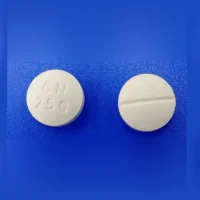 CN250
Chloroquine Phosphate 250 mg
White, round, 10 mm
Used for rheumatoid arthritis and amoeba infection
-
 A63
Everolimus 3 mg
White, round, 10 mm
Used for seizures
-
 A62
Everolimus 2 mg
White, round, 9 mm
Used for seizures
-
 AA 79
Nadolol 40 mg
White, round, 9 mm
Used for high blood pressure and heart failure
-
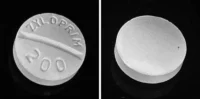 ZYLOPRIM 200
Allopurinol 200 mg
White, round, 9 mm
Used for gout
Other Tamoxifen Citrate pills
-
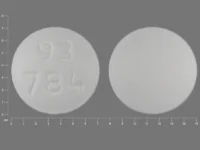 93 784
Tamoxifen Citrate 10 mg
White, round, 7 mm
Used for breast cancer and gynecomastia
- 964 Tamoxifen Citrate White, round, 8 mm Used for breast cancer and gynecomastia
- 965 Tamoxifen Citrate White, round, 10 mm Used for breast cancer and gynecomastia
- T10 Tamoxifen Citrate 10 mg White, round, 7 mm Used for breast cancer and gynecomastia
- M 144 Tamoxifen Citrate 10 mg White, round, 7 mm Used for breast cancer and gynecomastia
- 2232 WPI Tamoxifen Citrate 10 mg White, round, 8 mm Used for breast cancer and gynecomastia
- MYX 642 Tamoxifen Citrate 10 mg White, round, 7 mm Used for breast cancer and gynecomastia
- APO TAM 10 Tamoxifen Citrate 10 mg White, round Used for breast cancer and gynecomastia