Drawing based on the label description. No photo yet.
“Cefaclor Capsule USP 250 mg (blue cap and pink body hard gelatin capsule containing white to slightly yellowish powder imprinted with "KRC" on both capsule cap and capsule body) contains cefaclor USP (monohydrate) equivalent to 250 mg anhydrous cefaclor”
KRC pill
Pill with imprint KRC is blue & pink, capsule, 18 mm and has been identified as Cefaclor 250 mg. It is used for bronchitis, urinary tract infections (UTIs) and pneumonia. It is supplied by Carlsbad Technology, Inc.
Cefaclor 250 mg
- Imprint
- KRC
- Strength
- 250 mg
- Used for
- Bronchitis, urinary tract infections (UTIs) and pneumonia
- Color
- Blue, Pink
- Shape
- Capsule / oblong
- Size
- 18 mm
- Score
- No score line
- Form
- Capsule
- Manufacturer
- Carlsbad Technology, Inc
- Drug class
- Antibiotic (cephalosporin)
- NDC
- 61442-171, 61442-171-30, 61442-171-01, 61442-171-05
Source: the official drug label on DailyMed (US National Library of Medicine). Last checked .
Report a mistake
What is Cefaclor used for?
Cefaclor is used for bronchitis, urinary tract infections (UTIs), pneumonia and ear infections.
- Medicine type
- Antibiotic (cephalosporin)
Official uses from the US prescribing label
Cefaclor is indicated in the treatment of the following infections when caused by susceptible strains of the designated microorganisms:
Otitis media caused by Streptococcus pneumoniae, Haemophilus influenzae,staphylococci, and Streptococcus pyogenes
Note: β-lactamase-negative, ampicillin-resistant (BLNAR) strains of Haemophilus influenzae should be considered resistant to cefaclor despite apparent in vitro susceptibility of some BLNAR strains.
Lower respiratory tract infections, including pneumonia, caused by Streptococcus pneumoniae, Haemophilus influenzae,and Streptococcus pyogenes
Note: β-lactamase-negative, ampicillin-resistant (BLNAR) strains of Haemophilus influenzae should be considered resistant to cefaclor despite apparent in vitro susceptibility of some BLNAR strains.
Pharyngitis and Tonsillitis, caused by Streptococcus pyogenes
Note:Penicillin is the usual drug of choice in the treatment and prevention of streptococcal infections, including the prophylaxis of rheumatic fever. Cefaclor is generally effective in the eradication of streptococci from the nasopharynx; however, substantial data establishing the efficacy of cefaclor in the subsequent prevention of rheumatic fever are not available at present.
Urinary tract infections, including pyelonephritis and cystitis, caused by Escherichia coli, Proteus mirabilis, Klebsiella spp.,and coagulase-negative staphylococci
Skin and skin structure infections caused by Staphylococcus aureus and Streptococcus pyogenes
Appropriate culture and susceptibility studies should be performed to determine susceptibility of the causative organism to cefaclor.
To reduce the development of drug-resistant bacteria and maintain the effectiveness of Cefaclor Capsule and other antibacterial drugs, Cefaclor Capsule should be used only to treat or prevent infections that are proven or strongly suspected to be caused by susceptible bacteria. When culture and susceptibility information are available, they should be considered in selecting or modifying antibacterial therapy. In the absence of such data, local epidemiology and susceptibility patterns may contribute to the empiric selection of therapy.
From the FDA-approved label on DailyMed (published May 05, 2025).
Doctors sometimes prescribe a medicine for other reasons too. If you are not sure what yours is for, ask your pharmacist.
Is this your pill? Check every detail
- Your pill shows KRC.
- It is blue & pink, capsule, 18 mm.
- Its score line and coating match the details on this page.
- It came from a pharmacy package that names the same drug.
Ingredients
Active: Cefaclor
Inactive: Magnesium Stearate, Sodium Starch Glycolate Type A Potato, Lactose Monohydrate, Talc, Gelatin, Titanium Dioxide, Fd&c Blue No. 1, Fd&c Red No. 3, Shellac, Ammonia, Potassium Hydroxide, Ferrosoferric Oxide, Alcohol, Isopropyl Alcohol, Tert-Butyl Alcohol, Propylene Glycol
Pills that look similar but are different drugs
Same color and shape, different medicine. This is why the imprint matters.
-
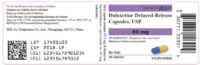 Y203 60mg
Duloxetine Hydrochloride 60 mg
Blue & yellow, capsule, 19 mm
Used for nerve pain from diabetes and anxiety
-
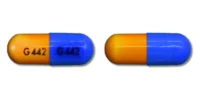 G442 G442
Dantrolene Sodium 50 mg
Blue & yellow, capsule, 18 mm
Used for multiple sclerosis and muscle stiffness (spasticity)
-
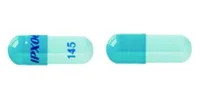 IPX066 145
Carbidopa and Levodopa 145 mg / 36.25 mg
Blue, capsule, 19 mm
Used for Parkinson's disease
-
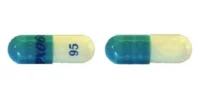 IPX066 95
Carbidopa and Levodopa 95 mg / 23.75 mg
Blue & white, capsule, 18 mm
Used for Parkinson's disease
-
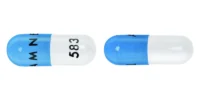 AMNEAL 583
Temazepam 7.5 mg
Blue & white, capsule, 18 mm
Used for depression and panic disorder
Schedule IV
-
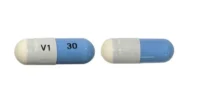 V1 30
Mexiletine Hydrochloride 150 mg
Blue & white, capsule, 18 mm
Used for nerve pain from diabetes and ventricular fibrillation
Other Cefaclor pills
- RX 658 Cefaclor 250 mg Blue & green, capsule, 18 mm Used for bronchitis and urinary tract infections (UTIs)
- RX 659 Cefaclor 500 mg Blue & green, capsule, 23 mm Used for bronchitis and urinary tract infections (UTIs)
- 93 1087 Cefaclor 500 mg Blue, oval, 17 mm Used for bronchitis and urinary tract infections (UTIs)
- KRC500 Cefaclor 500 mg Blue & orange, capsule, 23 mm Used for bronchitis and urinary tract infections (UTIs)