Drawing based on the label description. No photo yet.
“Quetiapine Extended-release tablets, USP 150 mg are white colored, round shaped, biconvex film-coated tablets, debossed with 'I1' on one side and plain on other”
I1 pill
Pill with imprint I1 is white, round, 8 mm and has been identified as Quetiapine Fumarate ER 150 mg. It is used for schizophrenia and bipolar disorder. It is supplied by Direct_rx.
Quetiapine Fumarate ER 150 mg
- Imprint
- I1
- Strength
- 150 mg
- Used for
- Schizophrenia and bipolar disorder
- Color
- White
- Shape
- Round
- Size
- 8 mm
- Score
- No score line
- Form
- Tablet, extended release
- Manufacturer
- Direct_rx
- NDC
- 72189-481, 16729-109, 72189-481-30
Source: the official drug label on DailyMed (US National Library of Medicine). Last checked .
Report a mistake
What is Quetiapine Fumarate ER used for?
Quetiapine Fumarate ER is used for schizophrenia and bipolar disorder.
Official uses from the US prescribing label
1.1 Schizophrenia
Quetiapine extended-release tablets are indicated for the treatment of schizophrenia. The efficacy of quetiapine extended-release tablets in schizophrenia was established in one 6-week and one maintenance trial in adults with schizophrenia. Efficacy was supported by three 6-week trials in adults with schizophrenia and one 6-week trial in adolescents with schizophrenia (13 to 17 years) treated with quetiapine.
1.2 Bipolar Disorder
Quetiapine extended-release tablets are indicated for the acute treatment of manic or mixed episodes associated with bipolar I disorder, both as monotherapy and as an adjunct to lithium or divalproex. The efficacy of quetiapine extended-release tablets in manic or mixed episodes of bipolar I disorder was established in one 3-week trial in adults with manic or mixed episodes associated with bipolar I disorder. Efficacy was supported by two 12-week monotherapy trials and one 3-week adjunctive trial in adults with manic episodes associated with bipolar I disorder as well as one 3-week monotherapy trial in children and adolescents (10 to 17 years) with manic episodes associated with bipolar I disorder treated with quetiapine.
Quetiapine extended-release tablets are indicated for the acute treatment of depressive episodes associated with bipolar disorder. The efficacy of quetiapine extended-release tablets was established in one 8-week trial in adults with bipolar I or II disorder and supported by two 8-week trials in adults with bipolar I or II disorder treated with quetiapine.
Quetiapine extended-release tablets are indicated for the maintenance treatment of bipolar I disorder, as an adjunct to lithium or divalproex. Efficacy was extrapolated from two maintenance trials in adults with bipolar I disorder treated with quetiapine. The effectiveness of monotherapy for the maintenance treatment of bipolar I disorder has not been systematically evaluated in controlled clinical trials.
1.3 Adjunctive Treatment of Major Depressive Disorder (MDD)
Quetiapine extended-release tablets are indicated for use as adjunctive therapy to antidepressants for the treatment of MDD. The efficacy of quetiapine extended-release tablets as adjunctive therapy to antidepressants in MDD was established in two 6-week trials in adults with MDD who had an inadequate response to antidepressant treatment.
1.4 Special Considerations in Treating Pediatric Schizophrenia and Bipolar I Disorder
Pediatric schizophrenia and bipolar I disorder are serious mental disorders, however, diagnosis can be challenging. For pediatric schizophrenia, symptom profiles can be variable, and for bipolar I disorder, patients may have variable patterns of periodicity of manic or mixed symptoms. It is recommended that medication therapy for pediatric schizophrenia and bipolar I disorder be initiated only after a thorough diagnostic evaluation has been performed and careful consideration given to the risks associated with medication treatment. Medication treatment for both pediatric schizophrenia and bipolar I disorder is indicated as part of a total treatment program that often includes psychological, educational and social interventions.
From the FDA-approved label on DailyMed (published Sep 29, 2025).
Doctors sometimes prescribe a medicine for other reasons too. If you are not sure what yours is for, ask your pharmacist.
Is this your pill? Check every detail
- One side shows I1 and the other side is plain.
- It is white, round, 8 mm.
- Its score line and coating match the details on this page.
- It came from a pharmacy package that names the same drug.
Ingredients
Active: Quetiapine Fumarate
Inactive: Polyethylene Glycol 400, Hypromellose 2208 (4000 Mpa.s), Titanium Dioxide, Lactose Monohydrate, Talc, Sodium Chloride, Hypromellose 2910 (6 Mpa.s), Povidone K30, Magnesium Stearate
Other pills with imprint I 1
Same imprint, different listing. Check the color, size and maker against your pill.
- I1 Amitriptyline HCl 10 mg Brown, round, 5 mm Used for depression and pain
- I1 Amitriptyline Hydrochloride 10 mg Brown, round, 5 mm Used for depression and pain
- I 1 Clopidogrel 300 mg Pink, capsule, 18 mm Used for chest pain (angina)
- I1 Clozapine 150 mg Yellow, round, 15 mm Used for bipolar disorder and schizophrenia
- I 1 Glimepiride 1 mg Pink, capsule, 8 mm Used for type 2 diabetes
- I 1 Naproxen 375 mg White, capsule, 14 mm Used for gout and period pain
Pills that look similar but are different drugs
Same color and shape, different medicine. This is why the imprint matters.
-
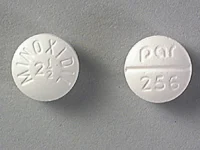 par 256 MINOXIDIL 2 1 2
Minoxidil 2.5 mg
White, round, 7 mm
Used for severe high blood pressure and hair loss
-
 A62
Everolimus 2 mg
White, round, 9 mm
Used for seizures
-
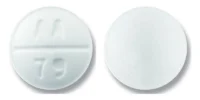 AA 79
Nadolol 40 mg
White, round, 9 mm
Used for high blood pressure and heart failure
-
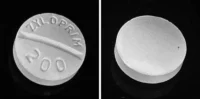 ZYLOPRIM 200
Allopurinol 200 mg
White, round, 9 mm
Used for gout
-
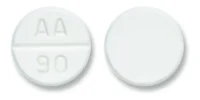 AA 90
Albuterol 4 mg
White, round, 9 mm
Used for asthma and bronchial spasm
-
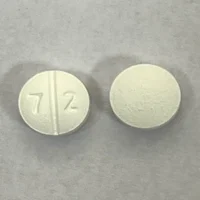 7 2
Tramadol Hydrochloride 50 mg
White, round, 8 mm
Used for pain
Schedule IV
Other Quetiapine Fumarate ER pills
- 381 Quetiapine Fumarate ER 150 mg White, capsule, 17 mm Used for schizophrenia and bipolar disorder
- 382 Quetiapine Fumarate ER 200 mg Yellow, capsule, 17 mm Used for schizophrenia and bipolar disorder
- I2 Quetiapine Fumarate ER 200 mg Yellow, round, 10 mm Used for schizophrenia and bipolar disorder
- I4 Quetiapine Fumarate ER 400 mg White, round, 13 mm Used for schizophrenia and bipolar disorder
- C 25 Quetiapine Fumarate ER 400 mg White, capsule, 21 mm Used for schizophrenia and bipolar disorder