Drawing based on the label description. No photo yet.
GPI250mg 907 pill
Pill with imprint GPI250mg 907 is yellow, capsule, 19 mm and has been identified as Penicillamine 250 mg. It is used for rheumatoid arthritis, cystinuria and hepatolenticular degeneration. It is supplied by Proficient Rx LP.
Penicillamine 250 mg
- Imprint
- GPI250mg 907
- Strength
- 250 mg
- Used for
- Rheumatoid arthritis, cystinuria and hepatolenticular degeneration
- Color
- Yellow
- Shape
- Capsule / oblong
- Size
- 19 mm
- Score
- No score line
- Form
- Capsule
- Manufacturer
- Proficient Rx LP
- Drug class
- Antirheumatic agent
- NDC
- 71205-916, 70010-907, 71205-916-00, 70010-907-01
Source: the official drug label on DailyMed (US National Library of Medicine). Last checked .
Report a mistake
What is Penicillamine used for?
Penicillamine is used for rheumatoid arthritis, cystinuria and hepatolenticular degeneration.
- Medicine type
- Antirheumatic agent
Official uses from the US prescribing label
Penicillamine capsules are indicated in the treatment of Wilson's disease, cystinuria, and in patients with severe, active rheumatoid arthritis who have failed to respond to an adequate trial of conventional therapy. Available evidence suggests that penicillamine capsules are not of value in ankylosing spondylitis.
Wilson's Disease
Wilson's disease (hepatolenticular degeneration) occurs in individuals who have inherited an autosomal recessive defect that leads to an accumulation of copper far in excess of metabolic requirements. The excess copper is deposited in several organs and tissues, and eventually produces pathological effects primarily in the liver, where damage progresses to postnecrotic cirrhosis, and in the brain, where degeneration is widespread. Copper is also deposited as characteristic, asymptomatic, golden-brown Kayser-Fleischer rings in the corneas of all patients with cerebral symptomatology and some patients who are either asymptomatic or manifest only hepatic symptomatology.
Two types of patients require treatment for Wilson's disease: the symptomatic, and the asymptomatic in whom it can be assumed the disease will develop in the future if the patient is not treated.
The diagnosis, if suspected on the basis of family or individual history or physical examination, can be confirmed if the plasma copper-protein ceruloplasmin is < 20 mg/dL and either a quantitative determination in a liver biopsy specimen shows an abnormally high concentration of copper (> 250 mcg/g dry weight) or Kayser-Fleischer rings are present. Treatment has two objectives:
to minimize dietary intake of copper;
to promote excretion and complex formation (i.e., detoxification) of excess tissue copper.
The first objective is attained by a daily diet that contains no more than 1 or 2 mg of copper. Such a diet should exclude, most importantly, chocolate, nuts, shellfish, mushrooms, liver, molasses, broccoli, and cereals and dietary supplements enriched with copper, and be composed to as great an extent as possible of foods with a low copper content. Distilled or demineralized water should be used if the patient's drinking water contains more than 0.1 mg/L of copper.
For the second objective, a copper chelating agent is used.
In symptomatic patients, this treatment usually produces marked neurologic improvement, fading of Kayser-Fleischer rings, and gradual amelioration of hepatic dysfunction and psychic disturbances.
Clinical experience to date suggests that life is prolonged with the above regimen.
Noticeable improvement may not occur for 1 to 3 months. Occasionally, neurologic symptoms become worse during initiation of therapy with penicillamine capsules. Despite this, the drug should not be withdrawn. Temporary interruption carries an increased risk of developing a sensitivity reaction upon resumption of therapy, although it may result in clinical improvement of neurological symptoms (see WARNINGS). If the neurological symptoms and signs continue to worsen for a month after the initiation of penicillamine capsules therapy, several short courses of treatment with 2,3 - dimercaprol (BAL) while continuing penicillamine capsules may be considered.
Treatment of asymptomatic patients has been carried out for over 30 years. Symptoms and signs of the disease appear to be prevented indefinitely if daily treatment with penicillamine capsules is continued.
Cystinuria
Cystinuria is characterized by excessive urinary excretion of the dibasic amino acids, arginine, lysine, ornithine, and cystine, and the mixed disulfide of cysteine and homocysteine. The metabolic defect that leads to cystinuria is inherited as an autosomal, recessive trait. Metabolism of the affected amino acids is influenced by at least two abnormal factors: defective gastrointestinal absorption and renal tubular dysfunction.
Arginine, lysine, ornithine, and cysteine are soluble substances, readily excreted. There is no apparent pathology connected with their excretion in excessive quantities.
Cystine, however, is so slightly soluble at the usual range of urinary pH that it is not excreted readily, and so crystallizes and forms stones in the urinary tract. Stone formation is the only known pathology in cystinuria.
Normal daily output of cystine is 40 to 80 mg. In cystinuria, output is greatly increased and may exceed 1 g/day. At 500 to 600 mg/day, stone formation is almost certain. When it is more than 300 mg/day, treatment is indicated.
Conventional treatment is directed at keeping urinary cystine diluted enough to prevent stone formation, keeping the urine alkaline enough to dissolve as much cystine as possible, and minimizing cystine production by a diet low in methionine (the major dietary precursor of cystine). Patients must drink enough fluid to keep urine specific gravity below 1.010, take enough alkali to keep urinary pH at 7.5 to 8, and maintain a diet low in methionine. This diet is not recommended in growing children and probably is contraindicated in pregnancy because of its low protein content (see PRECAUTIONS).
When these measures are inadequate to control recurrent stone formation, penicillamine capsules may be used as additional therapy, and when patients refuse to adhere to conventional treatment, penicillamine capsules may be a useful substitute. It is capable of keeping cystine excretion to near normal values, thereby hindering stone formation and the serious consequences of pyelonephritis and impaired renal function that develop in some patients. Bartter and colleagues depict the process by which penicillamine interacts with cystine to form penicillamine-cysteine mixed disulfide as:
In this process, it is assumed that the deprotonated form of penicillamine, PS', is the active factor in bringing about the disulfide interchange.
From the FDA-approved label on DailyMed (published Aug 24, 2026).
Doctors sometimes prescribe a medicine for other reasons too. If you are not sure what yours is for, ask your pharmacist.
Is this your pill? Check every detail
- Your pill shows GPI250mg 907. The parts can be split between the two sides, so turn the pill over and check both.
- It is yellow, capsule, 19 mm.
- Its score line and coating match the details on this page.
- It came from a pharmacy package that names the same drug.
Ingredients
Active: Penicillamine
Inactive: Ammonia, Anhydrous Lactose, Ferrosoferric Oxide, Fd&c Yellow No. 6, Gelatin, Unspecified, Magnesium Stearate, Propylene Glycol, Shellac, Titanium Dioxide
Also distributed by
Granules Pharmaceuticals Inc.
Pills that look similar but are different drugs
Same color and shape, different medicine. This is why the imprint matters.
-
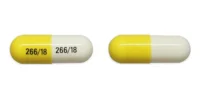 266 18
Atomoxetine 18 mg
White & yellow, capsule, 19 mm
Used for ADHD
-
 Y203 60mg
Duloxetine Hydrochloride 60 mg
Blue & yellow, capsule, 19 mm
Used for nerve pain from diabetes and anxiety
-
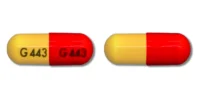 G443 G443
Dantrolene Sodium 100 mg
Red & yellow, capsule, 19 mm
Used for multiple sclerosis and muscle stiffness (spasticity)
-
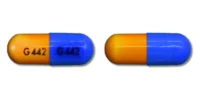 G442 G442
Dantrolene Sodium 50 mg
Blue & yellow, capsule, 18 mm
Used for multiple sclerosis and muscle stiffness (spasticity)
-
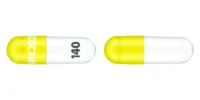 IPX203 140
Carbidopa and Levodopa 35 mg / 140 mg
White & yellow, capsule, 18 mm
Used for Parkinson's disease
-
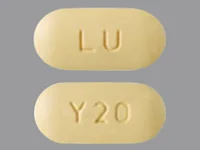 LU Y20
Quetiapine 400 mg
Yellow, capsule, 19 mm
Used for bipolar disorder and schizophrenia
Other Penicillamine pills
- ATON 705 CUPRIMINE Penicillamine 250 mg Yellow, capsule, 19 mm Used for rheumatoid arthritis and cystinuria
- RDY 634 Penicillamine 250 mg White, capsule, 19 mm Used for rheumatoid arthritis and cystinuria
- NAV 114 Penicillamine 250 mg White, capsule, 19 mm Used for rheumatoid arthritis and cystinuria
- LU L17 Penicillamine 250 mg White, oval, 14 mm Used for rheumatoid arthritis and cystinuria
- A98 Penicillamine 250 mg White, capsule, 19 mm Used for rheumatoid arthritis and cystinuria
- IG 609 Penicillamine 250 mg Yellow, capsule, 19 mm Used for rheumatoid arthritis and cystinuria
- 37 4401 Penicillamine 250 mg White, oval, 14 mm Used for rheumatoid arthritis and cystinuria
- PAR 146 Penicillamine 250 mg Yellow, capsule, 19 mm Used for rheumatoid arthritis and cystinuria