Drawing based on the label description. No photo yet.
“Ampicillin capsules, USP: Each capsule, for oral administration, contains ampicillin trihydrate equivalent to 250 mg or 500 mg ampicillin, and are supplied as: 250 mg: White, opaque, hard gelatin capsules, imprinted in black ink GG 850/GG 850”
GG850 GG850 pill
Pill with imprint GG850 GG850 is white, capsule, 18 mm and has been identified as Ampicillin 250 mg. It is used for urinary tract infections (UTIs), chest and airway infections and skin infections. It is supplied by Sandoz Inc.
Ampicillin 250 mg
- Imprint
- GG850 GG850
- Strength
- 250 mg
- Used for
- Urinary tract infections (UTIs), chest and airway infections and skin infections
- Color
- White
- Shape
- Capsule / oblong
- Size
- 18 mm
- Score
- No score line
- Form
- Capsule
- Manufacturer
- Sandoz Inc
- Drug class
- Antibiotic (penicillin)
- NDC
- 0781-2144, 0781-2144-01, 0781-2144-05
Source: the official drug label on DailyMed (US National Library of Medicine). Last checked .
Report a mistake
What is Ampicillin used for?
Ampicillin is used for urinary tract infections (UTIs), chest and airway infections, skin infections and gonorrhea.
- Medicine type
- Antibiotic (penicillin)
Official uses from the US prescribing label
To reduce the development of drug-resistant bacteria and maintain the effectiveness of ampicillin capsules, ampicillin for oral suspension and other antibacterial drugs, ampicillin capsules and ampicillin for oral suspension should be used only to treat or prevent infections that are proven or strongly suspected to be caused by bacteria. When culture and susceptibility information are available, they should be considered in selecting of modifying antimicrobial therapy, in the absence of such data, local epidemiology and susceptibility patterns contribute to the empiric selection of therapy.
Ampicillin capsules and ampicillin for oral suspension are indicated in the treatment of infections caused by susceptible strains of the designated organisms listed below:
Infections of the genitourinary tract including gonorrhea: E. coli, P. mirabilis, enterococci, Shigella, S. typhosaand other Salmonella, and nonpenicillinase producing N. gonorrhoeae.
Infections of the respiratory tract:Nonpenicillinase- producing H. influenzaeand staphylococci,and streptococciincluding streptococcus pneumoniae.
Infections of the gastrointestinal tract: Shigella, S. typhosaand other Salmonella, E. coli, P. mirabilis,and enterococci.
Meningitis: N. Meningitides.
Bacteriology studies to determine the causative organisms and their susceptibility to ampicillin should be performed. Therapy may be instituted prior to the results of susceptibility testing.
From the FDA-approved label on DailyMed (published Jul 28, 2026).
Doctors sometimes prescribe a medicine for other reasons too. If you are not sure what yours is for, ask your pharmacist.
Is this your pill? Check every detail
- Your pill shows GG850 GG850. The parts can be split between the two sides, so turn the pill over and check both.
- It is white, capsule, 18 mm.
- Its score line and coating match the details on this page.
- It came from a pharmacy package that names the same drug.
According to its label, this product is no longer being made or sold.
Ingredients
Active: Ampicillin Trihydrate
Inactive: Ammonia, Ferrosoferric Oxide, Gelatin, Unspecified, Magnesium Stearate, Potassium Hydroxide, Propylene Glycol, Shellac, Titanium Dioxide
Pills that look similar but are different drugs
Same color and shape, different medicine. This is why the imprint matters.
-
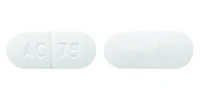 AC 79
Theophylline 450 mg
White, capsule, 19 mm
Used for asthma
-
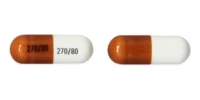 270 80
Atomoxetine 80 mg
Brown & white, capsule, 19 mm
Used for ADHD
-
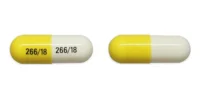 266 18
Atomoxetine 18 mg
White & yellow, capsule, 19 mm
Used for ADHD
-
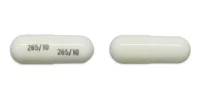 265 10
Atomoxetine 10 mg
White, capsule, 19 mm
Used for ADHD
-
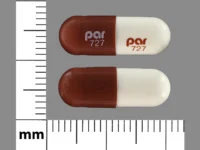 par 727
Doxycycline 100 mg
Brown & white, capsule, 19 mm
Used for pneumonia and syphilis
-
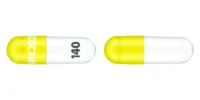 IPX203 140
Carbidopa and Levodopa 35 mg / 140 mg
White & yellow, capsule, 18 mm
Used for Parkinson's disease
Other Ampicillin pills
- AMP 250 Ampicillin 250 mg White, capsule, 18 mm Used for urinary tract infections (UTIs) and chest and airway infections
- GG851 GG851 Ampicillin 500 mg White, capsule, 22 mm Used for urinary tract infections (UTIs) and chest and airway infections
- WC404 Ampicillin 500 mg Gray, capsule, 23 mm Used for urinary tract infections (UTIs) and chest and airway infections
- AMP 500 Ampicillin 500 mg White, capsule, 22 mm Used for urinary tract infections (UTIs) and chest and airway infections
- No picture yet DIN 00020877 Ampicillin Trihydrate 250 mg Teva-Ampicillin, Capsule, sold in Canada Used for urinary tract infections (UTIs) and chest and airway infections
- No picture yet DIN 00020885 Ampicillin Trihydrate 500 mg Teva-Ampicillin, Capsule, sold in Canada Used for urinary tract infections (UTIs) and chest and airway infections