Drawing based on the label description. No photo yet.
“White, unscored, capsule-shaped tablets, debossed "E 757" on one face”
E757 pill
Pill with imprint E757 is white, capsule, 17 mm and has been identified as Sulfadiazine 500 mg. It is used for urinary tract infections (UTIs), ear infections and malaria. It is supplied by Epic Pharma, LLC.
Sulfadiazine 500 mg
- Imprint
- E757
- Strength
- 500 mg
- Used for
- Urinary tract infections (UTIs), ear infections and malaria
- Color
- White
- Shape
- Capsule / oblong
- Size
- 17 mm
- Score
- No score line
- Form
- Tablet
- Manufacturer
- Epic Pharma, LLC
- Drug class
- Antibiotic (sulfonamide)
- NDC
- 42806-757, 42806-757-60
Source: the official drug label on DailyMed (US National Library of Medicine). Last checked .
Report a mistake
What is Sulfadiazine used for?
Sulfadiazine is used for urinary tract infections (UTIs), ear infections and malaria.
- Medicine type
- Antibiotic (sulfonamide)
Official uses from the US prescribing label
Sulfadiazine Tablets are indicated in the following conditions:
Chancroid
Trachoma
Inclusion conjunctivitis
Nocardiosis
Urinary tract infections (primarily pyelonephritis, pyelitis and cystitis) in the absence of obstructive uropathy or foreign bodies, when these infections are caused by susceptible strains of the following organisms: Escherichia coli, Klebsiella species, Enterobacter species, Staphylococcus aureus, Proteus mirabilisand P. vulgaris. Sulfadiazine should be used for urinary tract infections only after use of more soluble sulfonamides has been unsuccessful.
Toxoplasmosis encephalitis in patients with and without acquired immunodeficiency syndrome, as adjunctive therapy with pyrimethamine.
Malaria due to chloroquine-resistant strains of Plasmodium falciparum, when used as adjunctive therapy.
Prophylaxis of meningococcal meningitis when sulfonamide-sensitive group A strains are known to prevail in family groups or larger closed populations (the prophylactic usefulness of sulfonamides when group B or C infections are prevalent is not proved and may be harmful in closed population groups).
Meningococcal meningitis, when the organism has been demonstrated to be susceptible.
Acute otitis media due to Haemophilus influenzae, when used concomitantly with adequate doses of penicillin.
Prophylaxis against recurrences of rheumatic fever, as an alternative to penicillin.
H. influenzaemeningitis, as adjunctive therapy with parental streptomycin.
IMPORTANT NOTES
In vitrosulfonamide susceptibility tests are not always reliable. The test must be carefully coordinated with bacteriologic and clinical response. When the patient is already taking sulfonamides, follow-up cultures should have aminobenzoic acid added to the culture media.
Currently, the increasing frequency of resistant organisms limits the usefulness of antibacterial agents, including the sulfonamides, especially in the treatment of recurrent and complicated urinary tract infections.
Wide variation in blood levels may result with identical doses. Blood levels should be measured in patients receiving sulfonamides for serious infections. Free sulfonamide blood levels of 5 mg to 15 mg per 100 mL may be considered therapeutically effective for most infections and blood levels of 12 mg to 15 mg per 100 mL may be considered optimal for serious infections. Twenty mg per 100 mL should be the maximum total sulfonamide level, since adverse reactions occur more frequently above this level.
From the FDA-approved label on DailyMed (published Sep 26, 2024).
Doctors sometimes prescribe a medicine for other reasons too. If you are not sure what yours is for, ask your pharmacist.
Is this your pill? Check every detail
- One side shows E 757 and the other side has no imprint.
- It is white, capsule, 17 mm.
- Its score line and coating match the details on this page.
- It came from a pharmacy package that names the same drug.
Ingredients
Active: Sulfadiazine
Inactive: Croscarmellose Sodium, Docusate Sodium, Microcrystalline Cellulose, Povidone, Unspecified, Sodium Benzoate, Sodium Starch Glycolate Type A Potato, Stearic Acid
Pills that look similar but are different drugs
Same color and shape, different medicine. This is why the imprint matters.
-
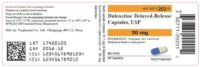 Y202 30mg
Duloxetine Hydrochloride 30 mg
Blue & white, capsule, 16 mm
Used for nerve pain from diabetes and anxiety
-
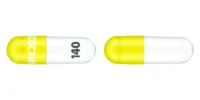 IPX203 140
Carbidopa and Levodopa 35 mg / 140 mg
White & yellow, capsule, 18 mm
Used for Parkinson's disease
-
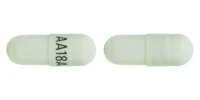 AA18A
Lenalidomide 5 mg
White, capsule, 18 mm
Used for multiple myeloma and mantle-cell lymphoma
-
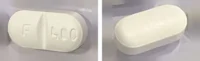 F 400
Cefixime 400 mg
White, capsule, 18 mm
Used for bronchitis and urinary tract infections (UTIs)
-
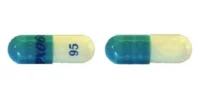 IPX066 95
Carbidopa and Levodopa 95 mg / 23.75 mg
Blue & white, capsule, 18 mm
Used for Parkinson's disease
-
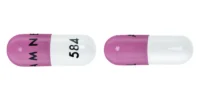 AMNEAL 584
Temazepam 22.5 mg
Pink & white, capsule, 18 mm
Used for depression and panic disorder
Schedule IV