Drawing based on the label description. No photo yet.
“Edarbyclor is supplied in the following dosage strengths: 40/12.5 mg: pale red, round, biconvex, film-coated tablets, approximately 9.7 mm in diameter, with "A/C" and "40/12.5" imprinted on one side”
AC 40 12 5 pill
Pill with imprint AC 40 12 5 is red, round, 10 mm and has been identified as Azilsartan Kamedoxomil and Chlorthalidone 40 mg / 12.5 mg. It is used for high blood pressure. It is supplied by Azurity Pharmaceuticals, Inc. (Formerly Arbor Pharmaceuticals).
Azilsartan Kamedoxomil and Chlorthalidone 40 mg / 12.5 mg
- Imprint
- AC 40 12 5
- Strength
- Azilsartan Kamedoxomil 40 mg / Chlorthalidone 12.5 mg
- Used for
- High blood pressure
- Color
- Red
- Shape
- Round
- Size
- 10 mm
- Score
- No score line
- Form
- Tablet
- Manufacturer
- Azurity Pharmaceuticals, Inc. (Formerly Arbor Pharmaceuticals)
- Drug class
- ARB (blood pressure medicine)
- NDC
- 60631-412, 60631-412-30
Source: the official drug label on DailyMed (US National Library of Medicine). Last checked .
Report a mistake
All Azilsartan Kamedoxomil and Chlorthalidone pills and guides
What is Azilsartan Kamedoxomil and Chlorthalidone used for?
Azilsartan Kamedoxomil and Chlorthalidone is used for high blood pressure.
- Medicine type
- ARB (blood pressure medicine); thiazide diuretic (water pill)
Official uses from the US prescribing label
Edarbyclor is indicated for the treatment of hypertension, to lower blood pressure.
Edarbyclor may be used in patients whose blood pressure is not adequately controlled on monotherapy.
Edarbyclor may be used as initial therapy if a patient is likely to need multiple drugs to achieve blood pressure goals.
Lowering blood pressure reduces the risk of fatal and nonfatal cardiovascular events, primarily strokes and myocardial infarctions. These benefits have been seen in controlled trials of antihypertensive drugs from a wide variety of pharmacologic classes including thiazide-like diuretics such as chlorthalidone and ARBs such as azilsartan medoxomil. There are no controlled trials demonstrating risk reduction with Edarbyclor.
Control of high blood pressure should be part of comprehensive cardiovascular risk management, including, as appropriate, lipid control, diabetes management, antithrombotic therapy, smoking cessation, exercise, and limited sodium intake. Many patients will require more than one drug to achieve blood pressure goals. For specific advice on goals and management of high blood pressure, see published guidelines, such as those of the National High Blood Pressure Education Program's Joint National Committee on Prevention, Detection, Evaluation, and Treatment of High Blood Pressure (JNC).
Numerous antihypertensive drugs, from a variety of pharmacologic classes and with different mechanisms of action, have been shown in randomized controlled trials to reduce cardiovascular morbidity and mortality, and it can be concluded that it is blood pressure reduction, and not some other pharmacologic property of the drugs, that is largely responsible for those benefits. The largest and most consistent cardiovascular outcome benefit has been a reduction in the risk of stroke, but reductions in myocardial infarction and cardiovascular mortality also have been seen regularly.
Elevated systolic or diastolic pressure causes increased cardiovascular risk, and the absolute risk increase per mmHg is greater at higher blood pressures, so that even modest reductions of severe hypertension can provide substantial benefit. Relative risk reduction from blood pressure reduction is similar across populations with varying absolute risk, so the absolute benefit is greater in patients who are at higher risk independent of their hypertension (for example, patients with diabetes or hyperlipidemia), and such patients would be expected to benefit from more aggressive treatment to a lower blood pressure goal.
Some antihypertensive drugs have smaller blood pressure effects (as monotherapy) in black patients; however, the blood pressure effect of Edarbyclor in blacks is similar to that in non-blacks. Many antihypertensive drugs have additional approved indications and effects (e.g., on angina, heart failure, or diabetic kidney disease). These considerations may guide selection of therapy.
The choice of Edarbyclor as initial therapy for hypertension should be based on an assessment of potential benefits and risks including whether the patient is likely to tolerate the starting dose of Edarbyclor.
Patients with moderate-to-severe hypertension are at a relatively high risk of cardiovascular events (e.g., stroke, heart attack, and heart failure), kidney failure, and vision problems, so prompt treatment is clinically relevant. Consider the patient's baseline blood pressure, target goal and the incremental likelihood of achieving the goal with a combination product, such as Edarbyclor, versus a monotherapy product when deciding upon initial therapy. Individual blood pressure goals may vary based on the patient's risk.
Data from an 8-week, active-controlled, factorial trial provide estimates of the probability of reaching a target blood pressure with Edarbyclor compared with azilsartan medoxomil or chlorthalidone monotherapy.
Figures 1.a-1.d provide estimates of the likelihood of achieving target clinic systolic and diastolic blood pressure control with Edarbyclor 40/25 mg tablets after 8 weeks, based on baseline systolic or diastolic blood pressure. The curve for each treatment group was estimated by logistic regression modeling and is more variable at the tails.
For example, a patient with a baseline blood pressure of 170/105 mm Hg has approximately a 48% likelihood of achieving a goal of <140 mm Hg (systolic) and 48% likelihood of achieving <90 mm Hg (diastolic) on azilsartan medoxomil 80 mg. The likelihood of achieving these same goals on chlorthalidone 25 mg is approximately 51% (systolic) and 40% (diastolic). These likelihoods rise to 85% (systolic) and 85% (diastolic) with Edarbyclor 40/25 mg.
From the FDA-approved label on DailyMed (published Nov 15, 2024).
Doctors sometimes prescribe a medicine for other reasons too. If you are not sure what yours is for, ask your pharmacist.
Is this your pill? Check every detail
- One side shows A/C 40/12.5 and the other side has no imprint.
- It is red, round, 10 mm.
- Its score line and coating match the details on this page.
- It came from a pharmacy package that names the same drug.
Sold under the brand name Edarbyclor.
Ingredients
Active: Azilsartan Kamedoxomil, Chlorthalidone
Inactive: Mannitol, Microcrystalline Cellulose, Talc, Titanium Dioxide, Ferric Oxide Red, Polyethylene Glycol 8000, Butyl Alcohol, Crospovidone (120 .mu.m), Water, Fumaric Acid, Sodium Hydroxide, Hydroxypropyl Cellulose (1600000 Wamw), Magnesium Stearate, Hypromellose, Unspecified, Shellac, Ferrosoferric Oxide, Alcohol
Pills that look similar but are different drugs
Same color and shape, different medicine. This is why the imprint matters.
-
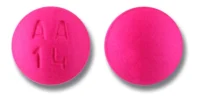 AA 14
Desipramine 75 mg
Red, round, 10 mm
Used for depression and ADHD
-
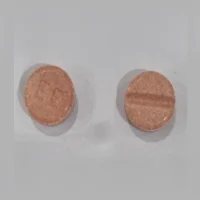 EE
Enalapril Maleate 10 mg
Red, round, 9 mm
Used for severe high blood pressure and heart failure
-
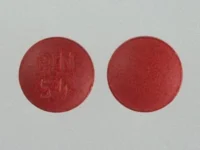 AN 54
Demeclocycline 150 mg
Red, round, 9 mm
Used for urinary tract infections (UTIs) and gonorrhea
-
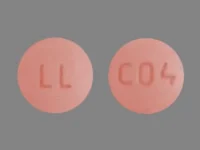 LL C04
Simvastatin 40 mg
Red, round, 10 mm
Used for high cholesterol and high triglycerides
-
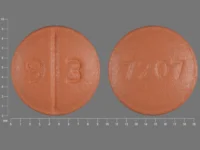 9 3 7207
Mirtazapine 30 mg
Red, round, 9 mm
Used for depression
-
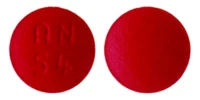 AN 54
Demeclocycline Hydrochloride 150 mg
Red, round, 9 mm
Used for urinary tract infections (UTIs) and gonorrhea