Drawing based on the label description. No photo yet.
A 1002 pill
Pill with imprint A 1002 is pink, oval, 19 mm and has been identified as Niacin and Lovastatin 1000 mg / 20 mg. It is used for high cholesterol. It is supplied by Physicians Total Care, Inc.
Niacin and Lovastatin 1000 mg / 20 mg
- Imprint
- A 1002
- Strength
- Niacin 1000 mg / Lovastatin 20 mg
- Used for
- High cholesterol
- Color
- Pink
- Shape
- Oval
- Size
- 19 mm
- Score
- No score line
- Form
- Tablet, extended release
- Manufacturer
- Physicians Total Care, Inc
- Drug class
- Nicotinic acid
- NDC
- 54868-5087, 0074-3007, 54868-5087-0
Source: the official drug label on DailyMed (US National Library of Medicine). Last checked .
Report a mistake
What is Niacin and Lovastatin used for?
Niacin and Lovastatin is used for high cholesterol.
- Medicine type
- Nicotinic acid; statin (cholesterol medicine)
Official uses from the US prescribing label
Therapy with lipid-altering agents should be only one component of multiple risk-factor intervention in individuals at significantly increased risk for atherosclerotic vascular disease due to hypercholesterolemia. Drug therapy is indicated as an adjunct to diet when the response to a diet restricted in saturated fat and cholesterol and other nonpharmacologic measures alone has been inadequate (see also Table 8 and the NCEP treatment guidelines1).
ADVICOR
ADVICOR (niacin extended-release and lovastatin) is indicated for use when treatment with both NIASPAN and lovastatin is appropriate. As described in the labeling for Niaspan and lovastatin below, the components of ADVICOR are both indicated for the treatment of hypercholesterolemia. Patients receiving treatment with ADVICOR should be on a standard cholesterol-lowering diet and should continue on this diet during treatment.
NIASPAN (niacin extended-release)
Hypercholesterolemia
NIASPAN is indicated as an adjunct to diet for reduction of elevated TC, LDL-C, Apo B and TG levels, and to increase HDL-C in patients with primary hypercholesterolemia (heterozygous familial and nonfamilial) and mixed dyslipidemia (Table 7), when the response to an appropriate diet has been inadequate.
Secondary Prevention of Cardiovascular Events
In patients with a history of myocardial infarction and hypercholesterolemia, niacin is indicated to reduce the risk of recurrent nonfatal myocardial infarction.
Hypertriglyceridemia
Niacin is also indicated as adjunctive therapy for treatment of adult patients with very high serum triglyceride levels (Table 7) who present a risk of pancreatitis and who do not respond adequately to a determined dietary effort to control them. Such patients typically have serum TG levels over 2000 mg/dL and have elevations of VLDL-C as well as fasting chylomicrons (Table 7). Patients who consistently have total serum or plasma TG below 1000 mg/dL are unlikely to develop pancreatitis. Therapy with niacin may be considered for those patients with TG elevations between 1000 and 2000 mg/dL who have a history of pancreatitis or of recurrent abdominal pain typical of pancreatitis. Some patients with TG under 1000 mg/dL may, through dietary or alcohol indiscretion, convert to a pattern with massive TG elevations accompanying fasting chylomicronemia, but the influence of niacin therapy on risk of pancreatitis in such situations has not been adequately studied. Drug therapy is not indicated for patients with hyperlipoproteinemia, who have elevations of chylomicrons and plasma TG, but who have normal levels of VLDL-C.
Lovastatin
Hypercholesterolemia
Lovastatin is indicated as an adjunct to diet for the reduction of elevated TC and LDL-C levels in patients with primary hypercholesterolemia (Table 7), when the response to diet restricted in saturated fat and cholesterol and to other nonpharmacological measures alone has been inadequate.
Primary Prevention of Cardiovascular Events
In individuals without symptomatic cardiovascular disease, average to moderately elevated TC and LDL-C, and below average HDL-C, lovastatin is indicated to reduce the risk of:
- Myocardial infarction
- Unstable angina
- Coronary revascularization procedures
Secondary Prevention of Cardiovascular Events
Lovastatin is also indicated to slow the progression of coronary atherosclerosis in patients with coronary heart disease as part of a treatment strategy to lower TC and LDL-C to target levels.
The National Cholesterol Education Program (NCEP) Treatment Guidelines are summarized below:
General Recommendations
Prior to initiating therapy with a lipid-lowering agent, secondary causes for hypercholesterolemia (e.g., poorly controlled diabetes mellitus, hypothyroidism, nephrotic syndrome, dysproteinemias, obstructive liver disease, other drug therapy, alcoholism) should be excluded, and a lipid profile performed to measure TC, HDL-C, and TG. For patients with TG < 400 mg/dL, LDL-C can be estimated using the following equation:
LDL-C = TC - [(0.20 x TG) + HDL-C]
For TG levels > 400 mg/dL, this equation is less accurate and LDL-C concentrations should be determined by ultracentrifugation. Lipid determinations should be performed at intervals of no less than 4 weeks and dosage adjusted according to the patient's response to therapy. The NCEP Treatment Guidelines are summarized in Table 8.
After the LDL-C goal has been achieved, if the TG is still ≥200 mg/dL, non-HDL-C (TC minus HDL-C) becomes a secondary target of therapy. Non-HDL-C goals are set 30 mg/dL higher than LDL-C goals for each risk category.
From the FDA-approved label on DailyMed (published Oct 09, 2012).
Doctors sometimes prescribe a medicine for other reasons too. If you are not sure what yours is for, ask your pharmacist.
Is this your pill? Check every detail
- Your pill shows A 1002. The parts can be split between the two sides, so turn the pill over and check both.
- It is pink, oval, 19 mm.
- Its score line and coating match the details on this page.
- It came from a pharmacy package that names the same drug.
Sold under the brand name Advicor.
According to its label, this product is no longer being made or sold.
Ingredients
Active: Niacin, Lovastatin
Inactive: Povidone, Stearic Acid, Polyethylene Glycols, Titanium Dioxide, Polysorbate 80, Ferric Oxide Red, Ferric Oxide Yellow, Ferrosoferric Oxide, Hypromelloses
Pills that look similar but are different drugs
Same color and shape, different medicine. This is why the imprint matters.
-
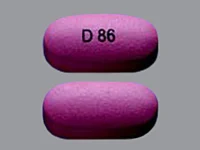 D 86
Divalproex Sodium 500 mg
Pink, oval, 19 mm
Used for depression and bipolar disorder
-
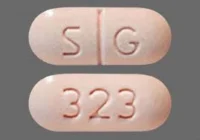 SG 323
Metaxalone 800 mg
Pink, oval, 19 mm
Used for muscle stiffness (spasticity) and muscle spasms
- F28 Dapagliflozin and Metformin Hydrochloride 5 mg / 1000 mg Pink, oval, 20 mm Used for type 2 diabetes and heart failure
- 1072 10 500 Dapagliflozin and Metformin Hydrochloride 10 mg / 500 mg Pink, oval, 20 mm Used for type 2 diabetes and heart failure
- ALM 900 Gabapentin 900 mg Pink, oval, 20 mm Used for bipolar disorder and focal seizures
- AC Lopinavir and Ritonavir 100 mg / 25 mg Pink, oval, 19 mm