Drawing based on the label description. No photo yet.
“Lovastatin Tablets USP, 10 mg are available as light peach, unscored, round, flat beveled tablets debossed "926" on one side and "TEVA" on the other side”
926 TEVA pill
Pill with imprint 926 TEVA is orange, round, 9 mm and has been identified as Lovastatin 10 mg. It is used for high cholesterol, high triglycerides and heart disease. It is supplied by International Laboratories, LLC.
Lovastatin 10 mg
- Imprint
- 926 TEVA
- Strength
- 10 mg
- Used for
- High cholesterol, high triglycerides and heart disease
- Color
- Orange
- Shape
- Round
- Size
- 9 mm
- Score
- No score line
- Form
- Tablet
- Manufacturer
- International Laboratories, LLC
- Drug class
- Statin (cholesterol medicine)
- NDC
- 54458-846, 54458-846-16, 70934-755, 0093-0926, 70934-755-90, 53002-2385, 53002-2385-1, 53002-2385-3, 53002-2385-6, 50090-3268, 50090-3268-0, 50090-3268-1, 0093-0926-06, 0093-0926-10, 51407-251, 51407-251-10, 51407-251-60, 51407-251-90
Source: the official drug label on DailyMed (US National Library of Medicine). Last checked .
Report a mistake
What is Lovastatin used for?
Lovastatin is used for high cholesterol, high triglycerides and heart disease.
- Medicine type
- Statin (cholesterol medicine)
Official uses from the US prescribing label
Therapy with lovastatin should be a component of multiple risk factor intervention in those individuals with dyslipidemia at risk for atherosclerotic vascular disease. Lovastatin should be used in addition to a diet restricted in saturated fat and cholesterol as part of a treatment strategy to lower total-C and LDL-C to target levels when the response to diet and other nonpharmacological measures alone has been inadequate to reduce risk.
Primary Prevention of Coronary Heart Disease
In individuals without symptomatic cardiovascular disease, average to moderately elevated total-C and LDL-C, and below average HDL-C, lovastatin is indicated to reduce the risk of:
- Myocardial infarction
- Unstable angina
- Coronary revascularization procedures
(See CLINICAL PHARMACOLOGY, Clinical Studies.)
Coronary Heart Disease
Lovastatin is indicated to slow the progression of coronary atherosclerosis in patients with coronary heart disease as part of a treatment strategy to lower total-C and LDL-C to target levels.
Hypercholesterolemia
Therapy with lipid-altering agents should be a component of multiple risk factor intervention in those individuals at significantly increased risk for artherosclerotic vascular disease due to hypercholesterolemia. Lovastatin is indicated as an adjunct to diet for the reduction of elevated total-C and LDL-C levels in patients with primary hypercholesterolemia (Types IIa and IIb 2), when the response to diet restricted in saturated fat and cholesterol and to other nonpharmacological measures alone has been inadequate.
Adolescent Patients with Heterozygous Familial Hypercholesterolemia
Lovastatin is indicated as an adjunct to diet to reduce total-C, LDL-C and apolipoprotein B levels in adolescent boys and girls who are at least one year post-menarche, 10 to 17 years of age, with heFH if after an adequate trial of diet therapy the following findings are present:
- LDL-C remains >189 mg/dL or
- LDL-C remains >160 mg/dL and:
- there is a positive family history of premature cardiovascular disease or
- two or more other CVD risk factors are present in the adolescent patient
General Recommendations
Prior to initiating therapy with lovastatin, secondary causes for hypercholesterolemia (e.g., poorly controlled diabetes mellitus, hypothyroidism, nephrotic syndrome, dysproteinemias, obstructive liver disease, other drug therapy, alcoholism) should be excluded, and a lipid profile performed to measure total-C, HDL-C, and TG. For patients with TG less than 400 mg/dL (<4.5 mmol/L), LDL-C can be estimated using the following equation:
LDL-C = total-C - [0.2 × (TG) + HDL-C]
For TG levels >400 mg/dL (>4.5 mmol/L), this equation is less accurate and LDL-C concentrations should be determined by ultracentrifugation. In hypertriglyceridemic patients, LDL-C may be low or normal despite elevated total-C. In such cases, lovastatin is not indicated.
The National Cholesterol Education Program (NCEP) Treatment Guidelines are summarized below:
After the LDL-C goal has been achieved, if the TG is still ≥200 mg/dL, non-HDL-C (total-C minus HDL-C) becomes a secondary target of therapy. Non-HDL-C goals are set 30 mg/dL higher than LDL-C goals for each risk category.
At the time of hospitalization for an acute coronary event, consideration can be given to initiating drug therapy at discharge if the LDL-C is ≥130 mg/dL (see NCEP Guidelines above).
Since the goal of treatment is to lower LDL-C, the NCEP recommends that LDL-C levels be used to initiate and assess treatment response. Only if LDL-C levels are not available, should the total-C be used to monitor therapy.
Although lovastatin may be useful to reduce elevated LDL-C levels in patients with combined hypercholesterolemia and hypertriglyceridemia where hypercholesterolemia is the major abnormality (Type IIb hyperlipoproteinemia), it has not been studied in conditions where the major abnormality is elevation of chylomicrons, VLDL or IDL (i.e., hyperlipoproteinemia types I, III, IV, or V). ***
The NCEP classification of cholesterol levels in pediatric patients with a familial history of hypercholesterolemia or premature cardiovascular disease is summarized below:
Children treated with lovastatin in adolescence should be re-evaluated in adulthood and appropriate changes made to their cholesterol-lowering regimen to achieve adult goals for LDL-C.
From the FDA-approved label on DailyMed (published Jul 24, 2026).
Doctors sometimes prescribe a medicine for other reasons too. If you are not sure what yours is for, ask your pharmacist.
Is this your pill? Check every detail
- One side shows 926 and the other side shows TEVA.
- It is orange, round, 9 mm.
- Its score line and coating match the details on this page.
- It came from a pharmacy package that names the same drug.
Ingredients
Active: Lovastatin
Inactive: Lactose Monohydrate, Magnesium Stearate, Cellulose, Microcrystalline, Starch, Corn, Butylated Hydroxyanisole, Fd&c Yellow No. 6
Also distributed by
Denton Pharma, Inc. Dba Northwind Pharmaceuticals, Rpk Pharmaceuticals, Inc., A-S Medication Solutions, Teva Pharmaceuticals Usa, Inc., Golden State Medical Supply, Inc.
Pills that look similar but are different drugs
Same color and shape, different medicine. This is why the imprint matters.
-
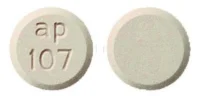 ap 107
Mebendazole 100 mg
Orange, round, 10 mm
Used for ancylostomiasis and ascariasis
-
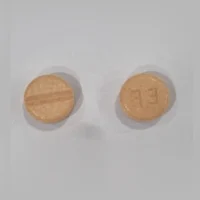 EF
Enalapril Maleate 20 mg
Orange, round, 9 mm
Used for severe high blood pressure and heart failure
-
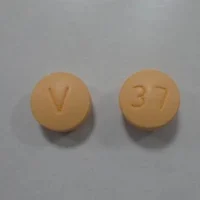 V 37
Ranitidine 150 mg
Orange, round, 10 mm
Used for acid reflux (GERD) and ulcers
-
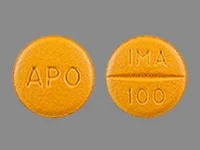 IMA 100 APO
Imatinib Mesylate 100 mg
Orange, round, 9 mm
Used for lymphoid leukemia and myeloid leukemia
-
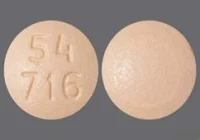 54 716
Desvenlafaxine 50 mg
Orange, round, 10 mm
Used for major depressive disorder
-
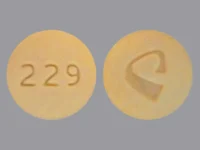 229 logo
Oxycodone and Acetaminophen 7.5 mg / 325 mg
Orange, round, 10 mm
Used for pain
Schedule II
Other Lovastatin pills
- LU G01 Lovastatin 10 mg Green, oval, 6 mm Used for high cholesterol and high triglycerides
- 791 Lovastatin 10 mg White, round, 6 mm Used for high cholesterol and high triglycerides
- MP 532 Lovastatin 10 mg Orange, round, 8 mm Used for high cholesterol and high triglycerides
- CTI 141 Lovastatin 10 mg White, round, 6 mm Used for high cholesterol and high triglycerides
- R 633 Lovastatin 10 mg White, round, 8 mm Used for high cholesterol and high triglycerides
- LU G02 Lovastatin 20 mg Green, round, 6 mm Used for high cholesterol and high triglycerides
- 792 Lovastatin 20 mg White, round, 8 mm Used for high cholesterol and high triglycerides
- MP 533 Lovastatin 20 mg Blue, round, 8 mm Used for high cholesterol and high triglycerides