Drawing based on the label description. No photo yet.
150mg N892 pill
Pill with imprint 150mg N892 is red, capsule, 18 mm and has been identified as Rifampin 150 mg. It is used for tuberculosis (TB), brucellosis and haemophilus infections. It is supplied by Ani Pharmaceuticals, Inc.
Rifampin 150 mg
- Imprint
- 150mg N892
- Strength
- 150 mg
- Used for
- Tuberculosis (TB), brucellosis and haemophilus infections
- Color
- Red
- Shape
- Capsule / oblong
- Size
- 18 mm
- Score
- No score line
- Form
- Capsule
- Manufacturer
- Ani Pharmaceuticals, Inc
- Drug class
- Antibiotic
- NDC
- 70954-892, 70954-892-10, 70954-892-20
Source: the official drug label on DailyMed (US National Library of Medicine). Last checked .
Report a mistake
What is Rifampin used for?
Rifampin is used for tuberculosis (TB), brucellosis and haemophilus infections.
- Medicine type
- Antibiotic
Official uses from the US prescribing label
In the treatment of both tuberculosis and the meningococcal carrier state, the small number of resistant cells present within large populations of susceptible cells can rapidly become the predominant type. Bacteriologic cultures should be obtained before the start of therapy to confirm the susceptibility of the organism to rifampin and they should be repeated throughout therapy to monitor the response to treatment. Since resistance can emerge rapidly, susceptibility tests should be performed in the event of persistent positive cultures during the course of treatment. If test results show resistance to rifampin and the patient is not responding to therapy, the drug regimen should be modified.
Tuberculosis
Rifampin is indicated in the treatment of all forms of tuberculosis.
A three-drug regimen consisting of rifampin, isoniazid, and pyrazinamide is recommended in the initial phase of short-course therapy which is usually continued for 2 months. The Advisory Council for the Elimination of Tuberculosis, the American Thoracic Society, and Centers for Disease Control and Prevention recommend that either streptomycin or ethambutol be added as a fourth drug in a regimen containing isoniazid (INH), rifampin, and pyrazinamide for initial treatment of tuberculosis unless the likelihood of INH resistance is very low. The need for a fourth drug should be reassessed when the results of susceptibility testing are known. If community rates of INH resistance are currently less than 4%, an initial treatment regimen with less than four drugs may be considered.
Following the initial phase, treatment should be continued with rifampin and isoniazid for at least 4 months. Treatment should be continued for longer if the patient is still sputum or culture positive, if resistant organisms are present, or if the patient is HIV positive.
Rifampin IV is indicated for the initial treatment and retreatment of tuberculosis when the drug cannot be taken by mouth.
Meningococcal Carriers
Rifampin is indicated for the treatment of asymptomatic carriers of Neisseria meningitidis to eliminate meningococci from the nasopharynx. Rifampin is not indicated for the treatment of meningococcal infection because of the possibility of the rapid emergence of resistant organisms (See WARNINGS).
Rifampin should not be used indiscriminately, and, therefore, diagnostic laboratory procedures, including serotyping and susceptibility testing, should be performed for establishment of the carrier state and the correct treatment. So that the usefulness of rifampin in the treatment of asymptomatic meningococcal carriers is preserved, the drug should be used only when the risk of meningococcal disease is high.
To reduce the development of drug-resistant bacteria and maintain the effectiveness of rifampin and other antibacterial drugs, rifampin should be used only to treat or prevent infections that are proven or strongly suspected to be caused by susceptible bacteria. When culture and susceptibility information are available, they should be considered in selecting or modifying antibacterial therapy. In the absence of such data, local epidemiology and susceptibility patterns may contribute to the empiric selection of therapy.
From the FDA-approved label on DailyMed (published Sep 25, 2026).
Doctors sometimes prescribe a medicine for other reasons too. If you are not sure what yours is for, ask your pharmacist.
Is this your pill? Check every detail
- Your pill shows 150mg N892. The parts can be split between the two sides, so turn the pill over and check both.
- It is red, capsule, 18 mm.
- Its score line and coating match the details on this page.
- It came from a pharmacy package that names the same drug.
Ingredients
Active: Rifampin
Inactive: Magnesium Stearate, Docusate Sodium, Sodium Benzoate, Starch, Corn, Talc, Cellulose, Microcrystalline, Silicon Dioxide, Gelatin, Water, Sodium Lauryl Sulfate, Titanium Dioxide, Fd&c Red No. 40, D&c Red No. 28, Fd&c Blue No. 1, Shellac, Ferrosoferric Oxide, Potassium Hydroxide, Propylene Glycol
Pills that look similar but are different drugs
Same color and shape, different medicine. This is why the imprint matters.
-
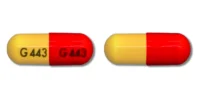 G443 G443
Dantrolene Sodium 100 mg
Red & yellow, capsule, 19 mm
Used for multiple sclerosis and muscle stiffness (spasticity)
-
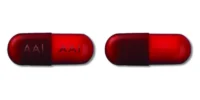 AA1
Methyltestosterone 10 mg
Red, capsule, 18 mm
Used for low testosterone and erectile dysfunction (ED)
Schedule III
-
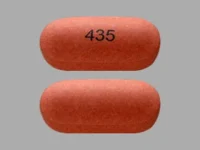 435
Mesalamine 800 mg
Red, capsule, 19 mm
Used for ulcerative colitis and proctitis
-
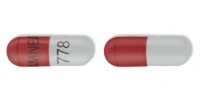 AMNEAL 778
Budesonide 3 mg
Gray & red, capsule, 19 mm
Used for inflammatory bowel disease and year-round allergies
-
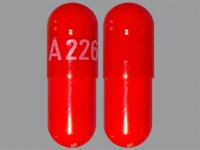 A226
Amantadine 100 mg
Red, capsule, 18 mm
Used for Parkinson's disease and flu
-
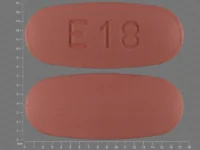 E 18
Moxifloxacin Hydrochloride 400 mg
Red, capsule, 17 mm
Used for bronchitis and sinus infections
Other Rifampin pills
-
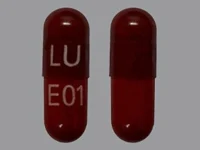 LU E01
Rifampin 150 mg
Red, capsule, 18 mm
Used for tuberculosis (TB) and brucellosis
-
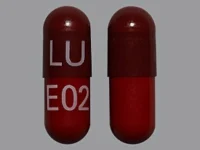 LU E02
Rifampin 300 mg
Red, capsule, 19 mm
Used for tuberculosis (TB) and brucellosis
- LANNETT 1393 Rifampin 150 mg Red, capsule, 18 mm Used for tuberculosis (TB) and brucellosis
- Rifampin 150 VP 015 Rifampin 150 mg Orange, capsule, 18 mm Used for tuberculosis (TB) and brucellosis
- CE 185 Rifampin 150 mg Red, capsule, 18 mm Used for tuberculosis (TB) and brucellosis
- E801 Rifampin 150 mg Orange, capsule, 18 mm Used for tuberculosis (TB) and brucellosis
- Rifampin 300 VP 018 Rifampin 300 mg Orange, capsule, 20 mm Used for tuberculosis (TB) and brucellosis
- E799 Rifampin 300 mg Red, capsule, 18 mm Used for tuberculosis (TB) and brucellosis