Drawing based on the description in the official product monograph. No photo yet.
“100 mg: Peach coloured, film coated, round shaped, biconvex tablet with peppermint odour, debossed with "S" and "100" separated by a score line on one side and 'mint leaf art' on the other side”
S 100 pill
Pill with imprint S 100 is orange, round and has been identified as Spironolactone 100 mg. It is used for high blood pressure, heart failure and swelling from fluid buildup. It is supplied by Mint Pharmaceuticals Inc.
Sold in Canada
Spironolactone 100 mg
- Brand
- Mint-Spironolactone
- Imprint
- S 100
- Strength
- 100 mg
- Used for
- High blood pressure, heart failure and swelling from fluid buildup
- Color
- Orange
- Shape
- Round
- Score
- Breaks into 2 pieces
- Form
- Tablet
- Manufacturer
- Mint Pharmaceuticals Inc
- Drug class
- Aldosterone blocker (heart and blood pressure medicine)
- Sold in
- Canada
- DIN
- 02488159
Source: Health Canada's Drug Product Database and the official product monograph. Last checked .
Report a mistake
What is Spironolactone used for?
Spironolactone is used for high blood pressure, heart failure, swelling from fluid buildup and low potassium.
- Medicine type
- Aldosterone blocker (heart and blood pressure medicine)
Official uses from the US prescribing label
Heart Failure
Spironolactone tablets are indicated for treatment of NYHA Class III-IV heart failure and reduced ejection fraction to increase survival, manage edema, and reduce the need for hospitalization for heart failure.
Spironolactone tablets are usually administered in conjunction with other heart failure therapies.
Hypertension
Spironolactone tablets are indicated as add-on therapy for the treatment of hypertension, to lower blood pressure in patients who are not adequately controlled on other agents. Lowering blood pressure reduces the risk of fatal and nonfatal cardiovascular events, primarily strokes and myocardial infarctions. These benefits have been seen in controlled trials of antihypertensive drugs from a wide variety of pharmacologic classes.
Control of high blood pressure should be part of comprehensive cardiovascular risk management, including, as appropriate, lipid control, diabetes management, antithrombotic therapy, smoking cessation, exercise, and limited sodium intake. Many patients will require more than one drug to achieve blood pressure goals. For specific advice on goals and management, see published guidelines, such as those of the National High Blood Pressure Education Program’s Joint National Committee on Prevention, Detection, Evaluation, and Treatment of High Blood Pressure (JNC).
Numerous antihypertensive drugs, from a variety of pharmacologic classes and with different mechanisms of action, have been shown in randomized controlled trials to reduce cardiovascular morbidity and mortality, and it can be concluded that it is blood pressure reduction, and not some other pharmacologic property of the drugs, that is largely responsible for those benefits. The largest and most consistent cardiovascular outcome benefit has been a reduction in the risk of stroke, but reductions in myocardial infarction and cardiovascular mortality also have been seen regularly.
Elevated systolic or diastolic pressure causes increased cardiovascular risk, and the absolute risk increase per mmHg is greater at higher blood pressures, so that even modest reductions of severe hypertension can provide substantial benefit. Relative risk reduction from blood pressure reduction is similar across populations with varying absolute risk, so the absolute benefit is greater in patients who are at higher risk independent of their hypertension (for example, patients with diabetes or hyperlipidemia), and such patients would be expected to benefit from more aggressive treatment to a lower blood pressure goal.
Some antihypertensive drugs have smaller blood pressure effects (as monotherapy) in black patients, and many antihypertensive drugs have additional approved indications and effects (e.g., on angina, heart failure, or diabetic kidney disease). These considerations may guide selection of therapy.
Edema Associated with Hepatic Cirrhosis or Nephrotic Syndrome
Spironolactone tablets are indicated for the management of edema in the following settings:
- Cirrhosis of the liver when edema is not responsive to fluid and sodium restriction.
- Nephrotic syndrome when treatment of the underlying disease, restriction of fluid and sodium intake, and the use of other diuretics produce an inadequate response.
Because it increases serum potassium, spironolactone tablets may be useful for treating edema when administration of other diuretics has caused hypokalemia.
Primary Hyperaldosteronism
Spironolactone tablets are indicated in the following settings:
- Short-term preoperative treatment of patients with primary hyperaldosteronism.
- Long-term maintenance therapy for patients with discrete aldosterone-producing adrenal adenomas who are not candidates for surgery.
- Long-term maintenance therapy for patients with bilateral micro or macronodular adrenal hyperplasia (idiopathic hyperaldosteronism).
From the FDA-approved label on DailyMed (published Oct 05, 2026).
Doctors sometimes prescribe a medicine for other reasons too. If you are not sure what yours is for, ask your pharmacist.
Is this your pill? Check every detail
- Your pill shows S 100. The parts can be split between the two sides, so turn the pill over and check both.
- It is orange, round.
- Its score line and coating match the details on this page.
- It came from a pharmacy package that names the same drug.
Sold in Canada as Mint-Spironolactone by Mint Pharmaceuticals Inc.
In Canada: prescription only.
Ingredients
Active: Spironolactone
Other pills with imprint S 100
Same imprint, different listing. Check the color, size and maker against your pill.
- S100 Carbidopa, Levodopa and Entacapone 25 mg / 100 mg / 200 mg Brown, oval, 16 mm Used for Parkinson's disease
- S 100 Cyclosporine 100 mg Gray, oval, 25 mm Used for myasthenia gravis and rheumatoid arthritis
- S100 Sarecycline Hydrochloride 100 mg Yellow, capsule, 15 mm Used for acne
- S100 Sildenafil 100 mg Blue, round, 14 mm Used for high blood pressure in the lungs and vasculogenic impotence
- S100 Sitagliptin 100 mg Brown, round, 10 mm Used for type 2 diabetes
- S 100 Sitagliptin Malate 100 mg Orange, round Used for type 2 diabetes
Pills that look similar but are different drugs
Same color and shape, different medicine. This is why the imprint matters.
-
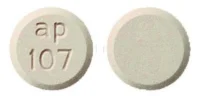 ap 107
Mebendazole 100 mg
Orange, round, 10 mm
Used for ancylostomiasis and ascariasis
-
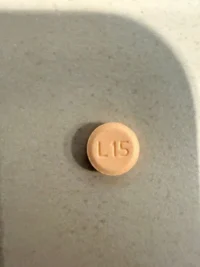 L15
Levothyroxine 0.025 mg
Orange, round, 6 mm
Used for goiter and myxedema
-
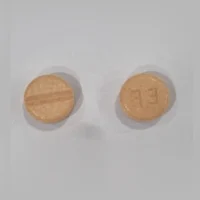 EF
Enalapril Maleate 20 mg
Orange, round, 9 mm
Used for severe high blood pressure and heart failure
-
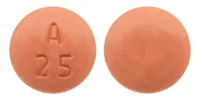 A25
Eltrombopag 25 mg
Orange, round, 7 mm
Used for aplastic anemia and idiopathic thrombocytopenic purpura
-
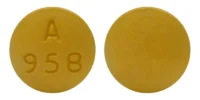 A 958
Lamotrigine 100 mg
Orange, round, 11 mm
Used for bipolar disorder and seizures
-
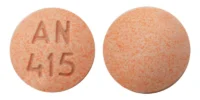 AN 415
Buprenorphine and Naloxone 8 mg / 2 mg
Orange, round, 11 mm
Used for opioid use disorder
Schedule III
Other Spironolactone pills
-
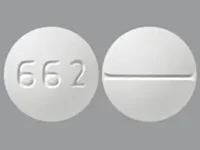 662
Spironolactone 100 mg
White, round, 11 mm
Used for high blood pressure and heart failure
-
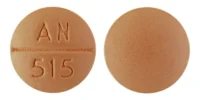 AN 515
Spironolactone 100 mg
Brown, round, 11 mm
Used for high blood pressure and heart failure
-
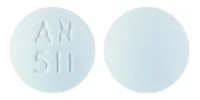 AN 511
Spironolactone 25 mg
White, round, 7 mm
Used for high blood pressure and heart failure
-
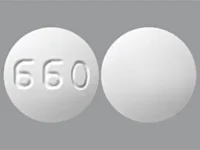 660
Spironolactone 25 mg
White, round, 7 mm
Used for high blood pressure and heart failure
-
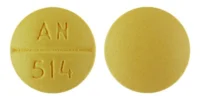 AN 514
Spironolactone 50 mg
Yellow, round, 9 mm
Used for high blood pressure and heart failure
-
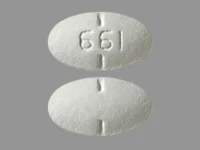 661
Spironolactone 50 mg
White, oval, 11 mm
Used for high blood pressure and heart failure
- 58 82 V Spironolactone 100 mg White, round, 12 mm Used for high blood pressure and heart failure
- R 673 Spironolactone 100 mg White, round, 17 mm Used for high blood pressure and heart failure