Teva-Clindamycin 150 mg – DIN 02241709
Teva-Clindamycin is Clindamycin Hydrochloride 150 mg (capsule), sold in Canada. It is used for bacterial vaginosis and acne. It is supplied by Teva Canada Limited. We don't have a photo or description of what this pill looks like yet, so check the name and code on the box or bottle, and ask a pharmacist before taking it. Its official Health Canada listing links to the product monograph, which describes the tablets.
Sold in Canada
Clindamycin Hydrochloride 150 mg
- Brand
- Teva-Clindamycin
- Strength
- 150 mg
- Used for
- Bacterial vaginosis and acne
- Form
- Capsule
- Manufacturer
- Teva Canada Limited
- Drug class
- Antibiotic (lincosamide)
- Sold in
- Canada
- DIN
- 02241709
Source: Health Canada's Drug Product Database. Last checked .
Report a mistake
What is Clindamycin used for?
Clindamycin is used for bacterial vaginosis and acne.
- Medicine type
- Antibiotic (lincosamide)
Official uses from the US prescribing label
Clindamycin is indicated in the treatment of serious infections caused by susceptible anaerobic bacteria.
Clindamycin is also indicated in the treatment of serious infections due to susceptible strains of streptococci, pneumococci, and staphylococci. Its use should be reserved for penicillin-allergic patients or other patients for whom, in the judgment of the physician, a penicillin is inappropriate. Because of the risk of colitis, as described in the BOXED WARNING, before selecting clindamycin, the physician should consider the nature of the infection and the suitability of less toxic alternatives (e.g., erythromycin).
Anaerobes:Serious respiratory tract infections such as empyema, anaerobic pneumonitis, and lung abscess; serious skin and soft tissue infections; septicemia; intra-abdominal infections such as peritonitis and intra-abdominal abscess (typically resulting from anaerobic organisms resident in the normal gastrointestinal tract); infections of the female pelvis and genital tract such as endometritis, nongonococcal tubo-ovarian abscess, pelvic cellulitis, and postsurgical vaginal cuff infection.
Streptococci:Serious respiratory tract infections; serious skin and soft tissue infections.
Staphylococci:Serious respiratory tract infections; serious skin and soft tissue infections.
Pneumococci:Serious respiratory tract infections.
Bacteriologic studies should be performed to determine the causative organisms and their susceptibility to clindamycin.
To reduce the development of drug-resistant bacteria and maintain the effectiveness of clindamycin hydrochloride capsules and other antibacterial drugs, clindamycin hydrochloride capsules should be used only to treat or prevent infections that are proven or strongly suspected to be caused by susceptible bacteria. When culture and susceptibility information are available, they should be considered in selecting or modifying antibacterial therapy. In the absence of such data, local epidemiology and susceptibility patterns may contribute to the empiric selection of therapy.
From the FDA-approved label on DailyMed (published Sep 28, 2026).
Doctors sometimes prescribe a medicine for other reasons too. If you are not sure what yours is for, ask your pharmacist.
Is this your medicine? Check the box
- The box or bottle shows DIN 02241709.
- It names Teva-Clindamycin, Clindamycin Hydrochloride 150 mg.
- A loose pill is a different matter: without a description of its markings, a pharmacist has to confirm what it is.
Sold in Canada as Teva-Clindamycin by Teva Canada Limited.
In Canada: prescription only.
Ingredients
Active: Clindamycin (Clindamycin Hydrochloride)
Other Clindamycin pills
-
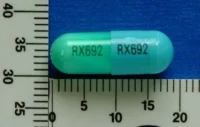 RX692
Clindamycin Hydrochloride 150 mg
Blue & green, capsule, 19 mm
Used for bacterial vaginosis and acne
-
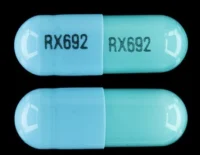 RX692 RX692
Clindamycin Hydrochloride 150 mg
Blue & green, capsule, 19 mm
Used for bacterial vaginosis and acne
-
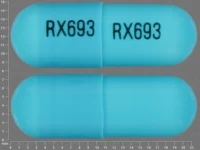 RX693 RX693
Clindamycin Hydrochloride 300 mg
Blue, capsule, 22 mm
Used for bacterial vaginosis and acne
- RX692 Clindamycin Hydrochloride 150 mg Blue, capsule, 19 mm Used for bacterial vaginosis and acne
- cor 153 Clindamycin Hydrochloride 150 mg Blue, capsule, 18 mm Used for bacterial vaginosis and acne
- DAN 5708 Clindamycin Hydrochloride 150 mg Gray & pink, capsule, 19 mm Used for bacterial vaginosis and acne
- Lannett 1382 Clindamycin Hydrochloride 150 mg Blue & green, capsule, 19 mm Used for bacterial vaginosis and acne
- GW 3171 Clindamycin Hydrochloride 150 mg Blue & red, capsule, 19 mm Used for bacterial vaginosis and acne