Drawing based on the label description. No photo yet.
“Carbamazepine Extended-Release Tablets USP, 400 mg - White to off white, round, biconvex coated tablets (imprinted with 'I259' in black ink on one side and plain on the other side), release portal on one side”
I259 pill
Pill with imprint I259 is white, round, 12 mm and has been identified as Carbamazepine 400 mg. It is used for PTSD, bipolar disorder and schizophrenia. It is supplied by Ingenus Pharmaceuticals, LLC.
Carbamazepine 400 mg
- Imprint
- I259
- Strength
- 400 mg
- Used for
- PTSD, bipolar disorder and schizophrenia
- Color
- White
- Shape
- Round
- Size
- 12 mm
- Score
- No score line
- Form
- Tablet, extended release
- Manufacturer
- Ingenus Pharmaceuticals, LLC
- Drug class
- Mood stabilizer
- NDC
- 50742-259, 50742-259-01
Source: the official drug label on DailyMed (US National Library of Medicine). Last checked .
Report a mistake
What is Carbamazepine used for?
Carbamazepine is used for PTSD, bipolar disorder, schizophrenia and psychosis.
- Medicine type
- Mood stabilizer
Official uses from the US prescribing label
Epilepsy
Carbamazepine is indicated for use as an anticonvulsant drug. Evidence supporting efficacy of carbamazepine as an anticonvulsant was derived from active drug-controlled studies that enrolled patients with the following seizure types:
- Partial seizures with complex symptomatology (psychomotor, temporal lobe). Patients with these seizures appear to show greater improvement than those with other types.
- Generalized tonic-clonic seizures (grand mal).
- Mixed seizure patterns which include the above, or other partial or generalized seizures. Absence seizures (petit mal) do not appear to be controlled by carbamazepine (see PRECAUTIONS, General).
Trigeminal Neuralgia
Carbamazepine is indicated in the treatment of the pain associated with true trigeminal neuralgia.
Beneficial results have also been reported in glossopharyngeal neuralgia.
This drug is not a simple analgesic and should not be used for the relief of trivial aches or pains.
From the FDA-approved label on DailyMed (published Oct 05, 2026).
Doctors sometimes prescribe a medicine for other reasons too. If you are not sure what yours is for, ask your pharmacist.
Is this your pill? Check every detail
- One side shows I259 and the other side is plain.
- It is white, round, 12 mm.
- Its score line and coating match the details on this page.
- It came from a pharmacy package that names the same drug.
Ingredients
Active: Carbamazepine
Inactive: Dextrates, Magnesium Stearate, Mannitol, Sodium Lauryl Sulfate, Cellulose Acetate, Polyethylene Glycol 8000, Hypromellose 2910 (5 Mpa.s), Hydroxyethyl Cellulose (140 Cps At 5%), Hydroxyethyl Cellulose (2000 Cps At 1%), Propylene Glycol, Ferrosoferric Oxide, Shellac
Pills that look similar but are different drugs
Same color and shape, different medicine. This is why the imprint matters.
-
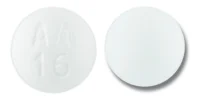 AA 16
Desipramine 150 mg
White, round, 11 mm
Used for depression and ADHD
-
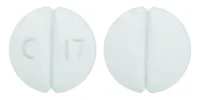 C 17
Aminocaproic Acid 500 mg
White, round, 13 mm
Used for hemorrhage
-
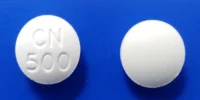 CN500
Chloroquine Phosphate 500 mg
White, round, 13 mm
Used for rheumatoid arthritis and amoeba infection
-
 A65
Everolimus 5 mg
White, round, 12 mm
Used for seizures
-
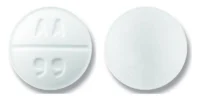 AA 99
Nadolol 80 mg
White, round, 11 mm
Used for high blood pressure and heart failure
-
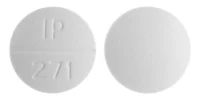 IP 271
Sulfamethoxazole and Trimethoprim 400 mg / 80 mg
White, round, 13 mm
Used for urinary tract infections (UTIs)
Other Carbamazepine pills
-
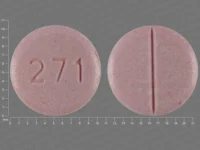 271
Carbamazepine 100 mg
Pink, round, 10 mm
Used for PTSD and bipolar disorder
-
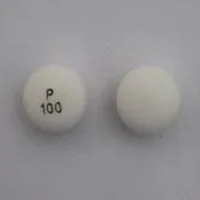 P100
Carbamazepine 100 mg
Yellow, round, 8 mm
Used for PTSD and bipolar disorder
-
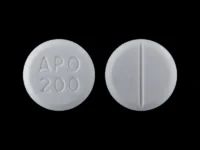 APO 200
Carbamazepine 200 mg
White, round, 10 mm
Used for PTSD and bipolar disorder
-
 P200
Carbamazepine 200 mg
Pink, round, 10 mm
Used for PTSD and bipolar disorder
-
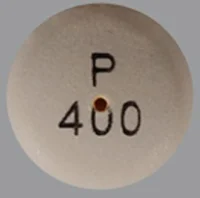 P400
Carbamazepine 400 mg
Brown, round, 12 mm
Used for PTSD and bipolar disorder
- 539 Carbamazepine Pink, capsule, 10 mm Used for PTSD and bipolar disorder
- 533 Carbamazepine Pink, capsule, 14 mm Used for PTSD and bipolar disorder
- 535 Carbamazepine Pink, capsule, 16 mm Used for PTSD and bipolar disorder