Drawing based on the label description. No photo yet.
“Ranitidine tablets, USP 300 mg (ranitidine HCI USP equivalent to 300 mg of ranitidine) are brown coloured, circular shaped, biconvex, beveled edge film-coated tablets debossed with "S/430" on one side and plain on the other side”
S 430 pill
Pill with imprint S 430 is brown, round, 13 mm and has been identified as Ranitidine 300 mg. It is used for acid reflux (GERD), ulcers and stomach ulcers. It is supplied by Aphena Pharma Solutions - Tennessee, LLC.
Ranitidine 300 mg
- Imprint
- S 430
- Strength
- 300 mg
- Used for
- Acid reflux (GERD), ulcers and stomach ulcers
- Color
- Brown
- Shape
- Round
- Size
- 13 mm
- Score
- No score line
- Form
- Tablet
- Manufacturer
- Aphena Pharma Solutions - Tennessee, LLC
- Drug class
- Acid reducer (H2 blocker)
- NDC
- 71610-371, 51407-245, 71610-371-80
Source: the official drug label on DailyMed (US National Library of Medicine). Last checked .
Report a mistake
What is Ranitidine used for?
Ranitidine is used for acid reflux (GERD), ulcers, stomach ulcers and Zollinger-Ellison syndrome.
- Medicine type
- Acid reducer (H2 blocker)
Official uses from the US prescribing label
Ranitidine Tablets are indicated in:
- Short-term treatment of active duodenal ulcer. Most patients heal within 4 weeks. Studies available to date have not assessed the safety of Ranitidine in uncomplicated duodenal ulcer for periods of more than 8 weeks.
- Maintenance therapy for duodenal ulcer patients at reduced dosage after healing of acute ulcers. No placebo – controlled comparative studies have been carried out for periods longer than 1 year.
- The treatment of pathological hypersecretory conditions. (e.g., Zollinger-Ellison syndrome and systemic mastocytosis).
- Short-term treatment of active, benign gastric ulcers. Most patients heal within 6 weeks and the usefulness of further treatment has not been demonstrated. Studies available to date have not assessed the safety of ranitidine in uncomplicated, benign gastric ulcer for periods of more than 6 weeks.
- Maintenance therapy for gastric ulcer patients at reduced dosage after healing of acute ulcers. Placebo-controlled studies have been carried out for 1 year.
- Treatment of GERD. Symptomatic relief commonly occurs within 24 hours after starting therapy with Ranitidine Tablets USP, 150 mg twice daily.
- Treatment of endoscopically diagnosed erosive esophagitis. Symptomatic relief of heartburn commonly occurs within 24 hours of therapy initiation with Ranitidine Tablets USP, 150 mg 4 times daily.
- Maintenance of healing of erosive esophagitis. Placebo-controlled trials have been carried out for 48 weeks.
Concomitant antacids should be given as needed for pain relief to patients with active duodenal ulcer; active, benign gastric ulcer; hypersecretory states; GERD; and erosive esophagitis.
From the FDA-approved label on DailyMed (published Sep 25, 2026).
Doctors sometimes prescribe a medicine for other reasons too. If you are not sure what yours is for, ask your pharmacist.
Is this your pill? Check every detail
- One side shows S/430 and the other side is plain.
- It is brown, round, 13 mm.
- Its score line and coating match the details on this page.
- It came from a pharmacy package that names the same drug.
Ingredients
Active: Ranitidine Hydrochloride
Inactive: Magnesium Stearate, Cellulose, Microcrystalline, Croscarmellose Sodium, Silicon Dioxide, Hypromelloses, Titanium Dioxide, Triacetin, Ferric Oxide Red
Pills that look similar but are different drugs
Same color and shape, different medicine. This is why the imprint matters.
-
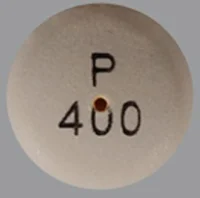 P400
Carbamazepine 400 mg
Brown, round, 12 mm
Used for PTSD and bipolar disorder
- A TI Thyroid, Porcine 300 mg Brown, round, 13 mm
- C400 Carbamazepine 400 mg Brown, round, 12 mm Used for PTSD and bipolar disorder
- leaf 240 Thyroid 240 mg Brown, round, 13 mm
- LCI 65 Chlorpromazine Hydrochloride 200 mg Brown, round, 13 mm Used for anxiety and schizophrenia
- VIO9111 9111 Pancrelipase PANCRELIPASE LIPASE 10440 USP units / PANCRELIPASE PROTEASE 39150 USP units / PANCRELIPASE AMYLASE 39150 USP units Brown, round, 13 mm Used for exocrine pancreatic insufficiency
Other Ranitidine pills
-
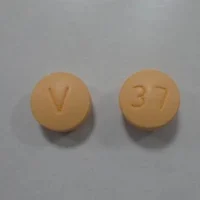 V 37
Ranitidine 150 mg
Orange, round, 10 mm
Used for acid reflux (GERD) and ulcers
- G 00 30 Ranitidine White, round, 10 mm Used for acid reflux (GERD) and ulcers
- G 0031 Ranitidine White, oval, 15 mm Used for acid reflux (GERD) and ulcers
- WATSON 760 Ranitidine Hydrochloride Gray, round, 16 mm Used for acid reflux (GERD) and ulcers
- WATSON 761 Ranitidine Hydrochloride Gray, oval, 16 mm Used for acid reflux (GERD) and ulcers
- C108 Ranitidine Hydrochloride Yellow, round, 10 mm Used for acid reflux (GERD) and ulcers
- IP253 Ranitidine 150 mg Orange, round, 9 mm Used for acid reflux (GERD) and ulcers
- PAR 544 Ranitidine 150 mg Brown, round, 9 mm Used for acid reflux (GERD) and ulcers